
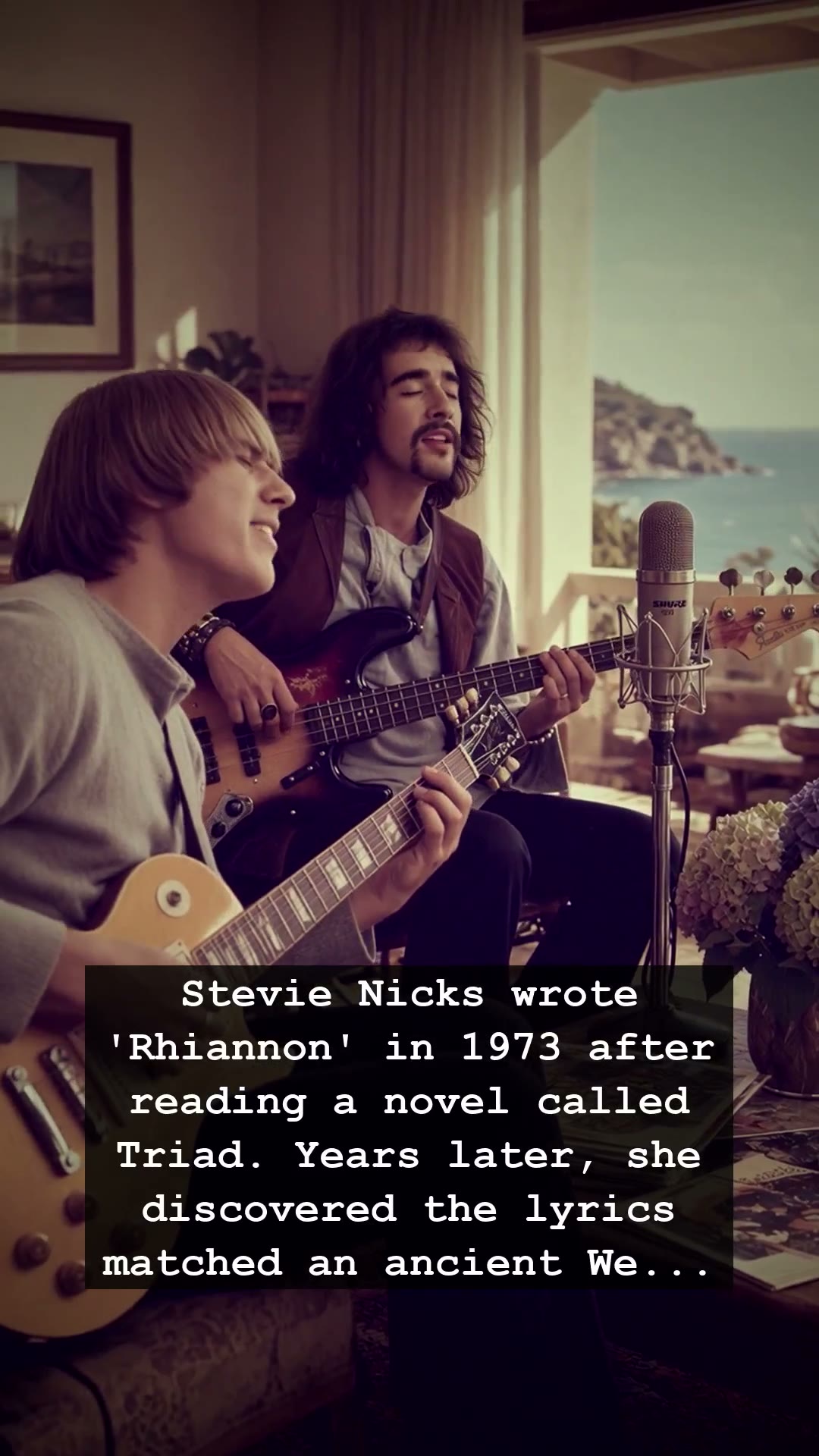
It was 1973, a time when the haze of the post-Woodstock era was slowly giving way to the polished sheen of the mid-seventies, and Stevie Nicks was just beginning to find her voice in the swirling vortex of the Los Angeles music scene. Before the global superstardom of Fleetwood Mac, before the iconic shawls and the velvet top hats became the visual shorthand for rock and roll mysticism, there was only a dusty bookstore and a book titled Triad. Little did Stevie Nicks know that the lyrics she scribbled down, inspired by a character in a novel, would soon transcend the printed page to touch something far older and more profound than a simple pop melody.
The creation of Rhiannon remains one of the most enigmatic tales in the annals of classic rock. Stevie Nicks wrote the song while transfixed by the narrative of a woman who possessed a strange, ethereal power. At the time, she viewed the lyrics as nothing more than a creative response to a story she had encountered on a whim. Yet, as the song took flight, something peculiar happened. Listeners began to point out that the lyrics mirrored an ancient Welsh mythological figure—a horse goddess of sovereignty and transformation. It was as if Stevie Nicks had tapped into a collective consciousness, accidentally weaving a centuries-old legend into the fabric of the modern FM radio landscape.
There is a haunting, cinematic quality to the music of that era, a time when the crackle of a vinyl record on a turntable felt like an invitation to another world. Stevie Nicks delivered Rhiannon with a vocal performance that was both vulnerable and commanding, a signature blend that would define her career for decades. During live performances, the song became a spiritual ritual. As the stage lights dimmed and the intensity grew, the track shifted from a mere radio hit into a dramatic spectacle. She wasn’t just singing a song; she was channeling a narrative force that seemed to move through her, leaving audiences spellbound in the dark, crowded concert halls of the late seventies.
Beyond the mythology, the song represents the dark, creative heart of the California dream. It was a time of immense pressure, when the boundary between the artist and the art became dangerously thin. For Stevie Nicks, the success of the track served as both a blessing and a burden, pushing her into a spotlight that would eventually reveal the deep personal tolls of fame. Her ability to translate personal yearning into universal folklore is exactly why her music remains a permanent fixture of our nostalgia. We don’t just listen to Stevie Nicks; we live within the shadows and the light she carefully constructed in her lyrics.
Even today, the opening chords of Rhiannon evoke a sensory rush—the smell of old leather jackets, the static on a car radio, and the feeling of endless possibility that defined the seventies. Stevie Nicks proved that music could be a conduit for the unknown, bridging the gap between ancient myths and modern heartache. Whether it was a profound coincidence or a deeper creative intuition, the legend of the song continues to endure. As you listen again, notice how her voice still carries that same mysterious, timeless magic that first captured the world so many years ago.