
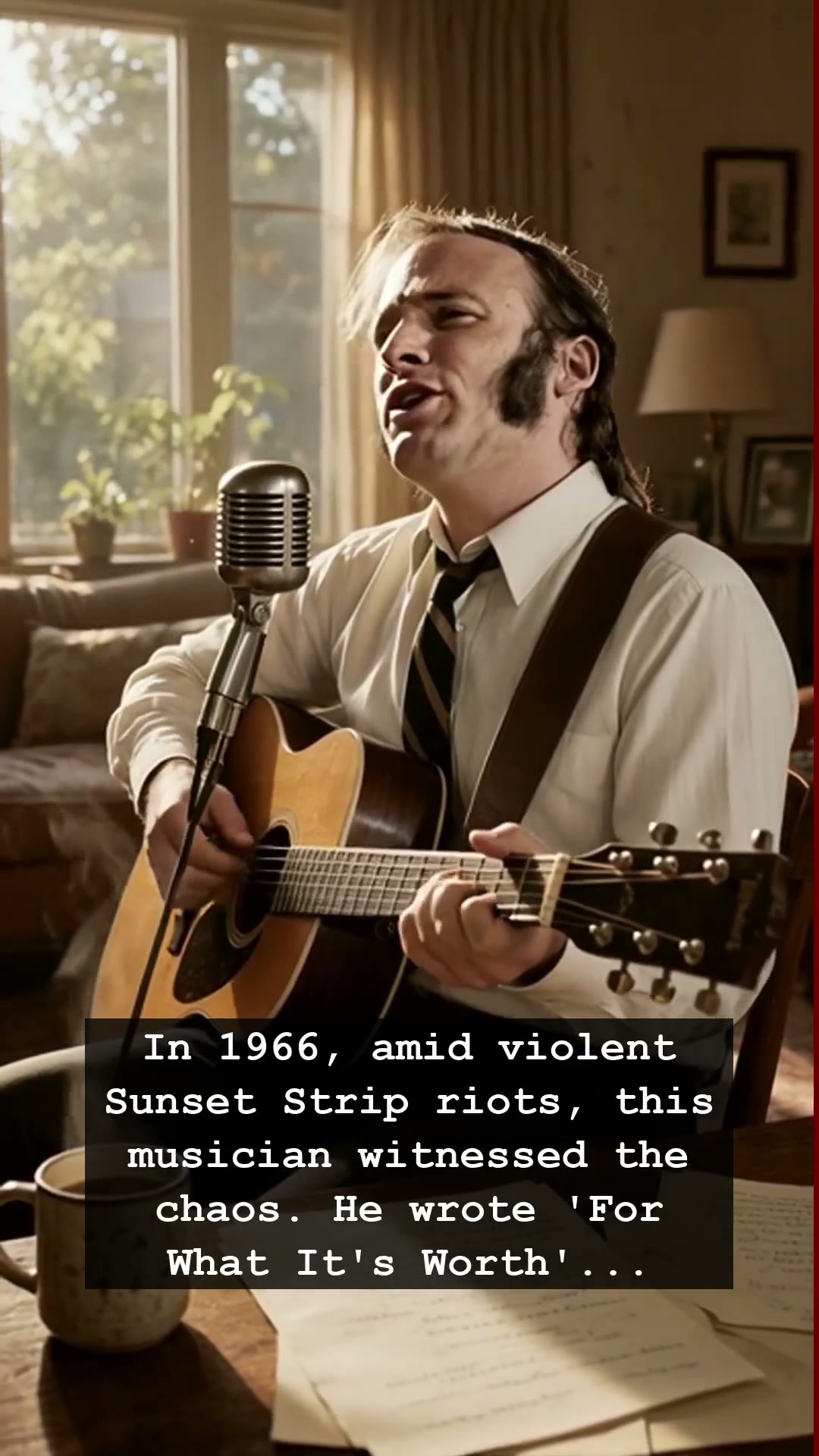
It was late 1966, and the Sunset Strip in Los Angeles was not the neon-lit paradise portrayed in postcards; it was a battleground. Young people, disillusioned by authority and drawn to the burgeoning counterculture, found themselves clashing with police in a series of violent riots. Amidst the tear gas, the flashing sirens, and the sound of breaking glass, a young musician named Stephen Stills stood on the sidewalk, watching the volatile friction between a generation and its keepers. The atmosphere was thick with tension, a palpable shift in the American psyche that signaled the end of innocence. Stills did not just walk away; he took the fractured energy of that night and bottled it into a melody that would define a decade.
Returning to his home, Stephen Stills felt the urgency of the moment burning in his veins. In a creative flash of brilliance that lasted barely fifteen minutes, he penned For What It’s Worth. The song was not merely a protest anthem; it was a haunting, rhythmic observation of the paranoia that had begun to seep into the California air. With its iconic, trembling guitar harmonics and that distinct, cautionary opening line, the song became the heartbeat of a restless nation. While many artists of the era were busy chasing the psychedelic dream, Stills captured the grim, waking reality of the street.
This was the era of the Jukebox, when a song could travel from a smoke-filled club in West Hollywood to a living room in Ohio, carrying the weight of social unrest across the miles. The success of Buffalo Springfield, the band Stephen Stills was a member of, was inextricably tied to this single track. It transformed them from local L.A. icons into the voice of a confused, shifting culture. For many who were there, the song serves as an involuntary time machine, transporting them back to a world of Woodstock anticipation and the encroaching shadow of the Vietnam era.
The genius of the composition lies in its restraint. There are no frantic crescendos, only a steady, pulsing warning that things are changing. Even today, decades later, hearing the opening notes of For What It’s Worth evokes a specific kind of nostalgia—the feeling of a generation trying to find its footing on shifting ground. It is a testament to the songwriting prowess of Stephen Stills that a track born from a chaotic street riot could become a timeless piece of American history, immortalized in films, documentaries, and the collective memory of an entire generation.
As the golden age of classic American rock continues to fade into the rearview mirror, songs like this remain our most reliable anchors. They remind us of a time when music was dangerous, when the words mattered, and when a man with a guitar could stand in the middle of a riot and speak for millions. Do you remember where you were when you first heard that haunting riff, or has it simply always been a part of your life? In the end, the history of music is the history of the moments that shaped us, and Stephen Stills ensured we would never forget the night the Sunset Strip finally caught fire.