
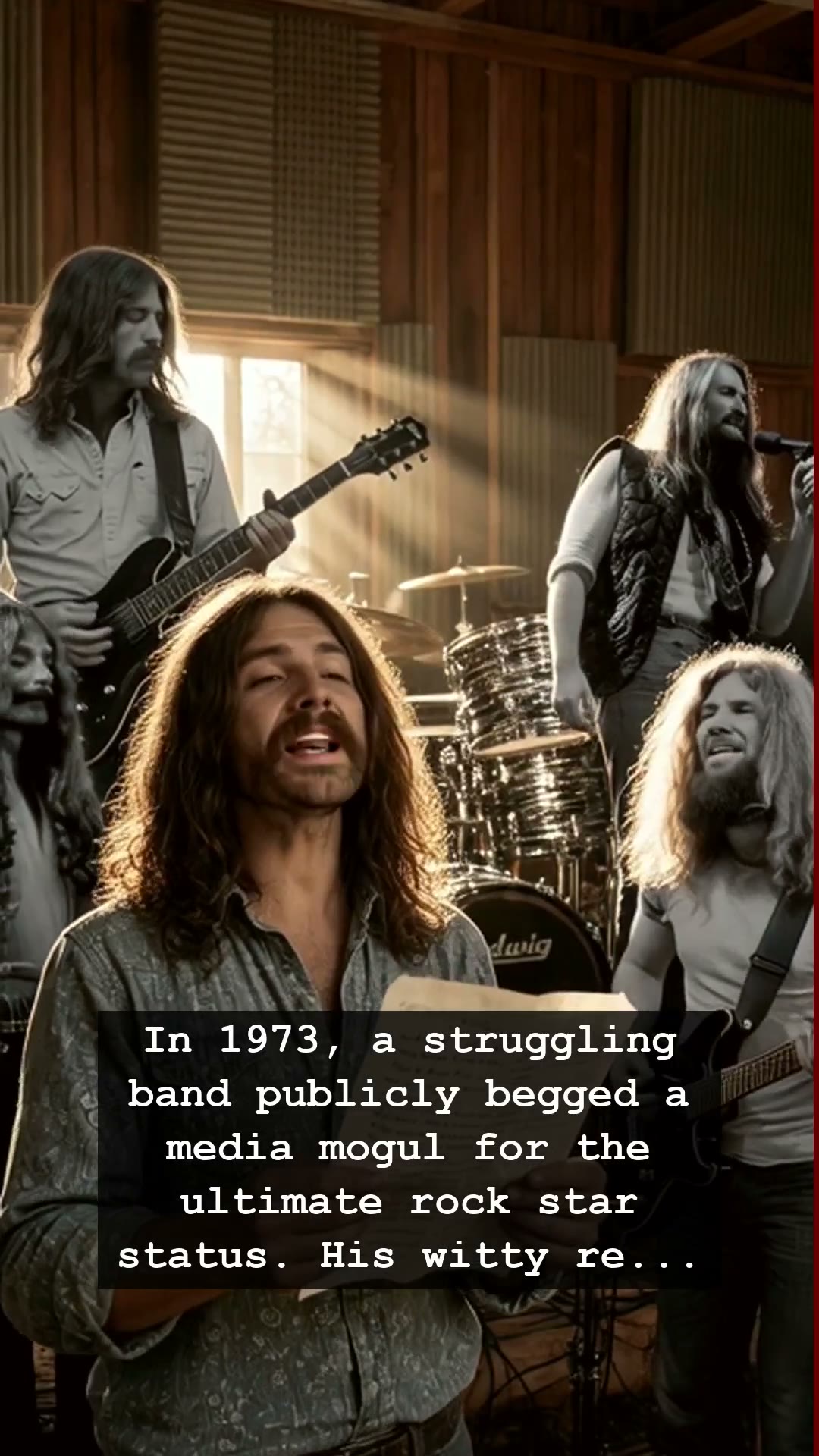
It was 1973, an era defined by the crackle of the Jukebox and the neon glow of shifting musical tides. In the smoke-filled haze of the rock scene, one band stood out not for their polished glamour, but for their raw, desperate hunger for the spotlight. Dr. Hook and the Medicine Show were struggling to break through the noise of a rapidly changing industry. They were tired of the mid-tier circuits and the anonymity that plagued so many talented musicians of the seventies. They didn’t just want to play music; they wanted the mythical, larger-than-life status that came with being a true rock icon, and they weren’t afraid to ask for it in the most audacious way imaginable.
At the center of this ambition was a bold, tongue-in-cheek plea directed at Rolling Stone magazine founder Jann Wenner. The band, led by the charismatic and often unpredictable Ray Sawyer, decided that if they couldn’t buy their way onto the front page of the music bible, they would write a song about it instead. The resulting track, The Cover of Rolling Stone, was a satirical masterpiece that cut right to the heart of the counterculture. It was a cheeky, infectious jab at the desperation of fame, written by the legendary Shel Silverstein, who understood that the best way to get attention was to mock the very mechanisms that distributed it.
When Dr. Hook and the Medicine Show released the song, the response was electric. The lyrics were a hilarious admission of vanity, essentially begging for the validation of the glossy magazine cover that defined success for every artist in the Woodstock generation. It was a meta-commentary on the fame machine before the term even existed. The media mogul, realizing the gold mine of self-awareness the band had tapped into, eventually relented. The band did, in fact, land on the cover of the magazine, turning their ironic anthem into an immortal piece of rock history that bridged the gap between cynical reality and pop stardom.
Looking back, the story of Dr. Hook and the Medicine Show feels like a snapshot of a more authentic time. It was a period when you could still taste the grit of the road and the genuine struggle of trying to make it big. Today, the song serves as a reminder of an era where art, irony, and celebrity collided in the most public way possible. It evokes the smell of cheap hairspray, the hum of analog amplifiers, and the persistent, throbbing heartbeat of a generation that valued personality over perfection.
Even decades later, hearing that opening hook brings listeners right back to the smoky atmosphere of a 1970s radio broadcast. It captures that rare moment where a band stopped chasing the spotlight and managed to pull it toward them through pure, unadulterated wit. The legacy of Dr. Hook and the Medicine Show remains etched in the archives of classic rock, proving that sometimes, the best path to glory is to simply tell the world exactly how much you want it. Do you remember the first time you heard that iconic chorus play?