
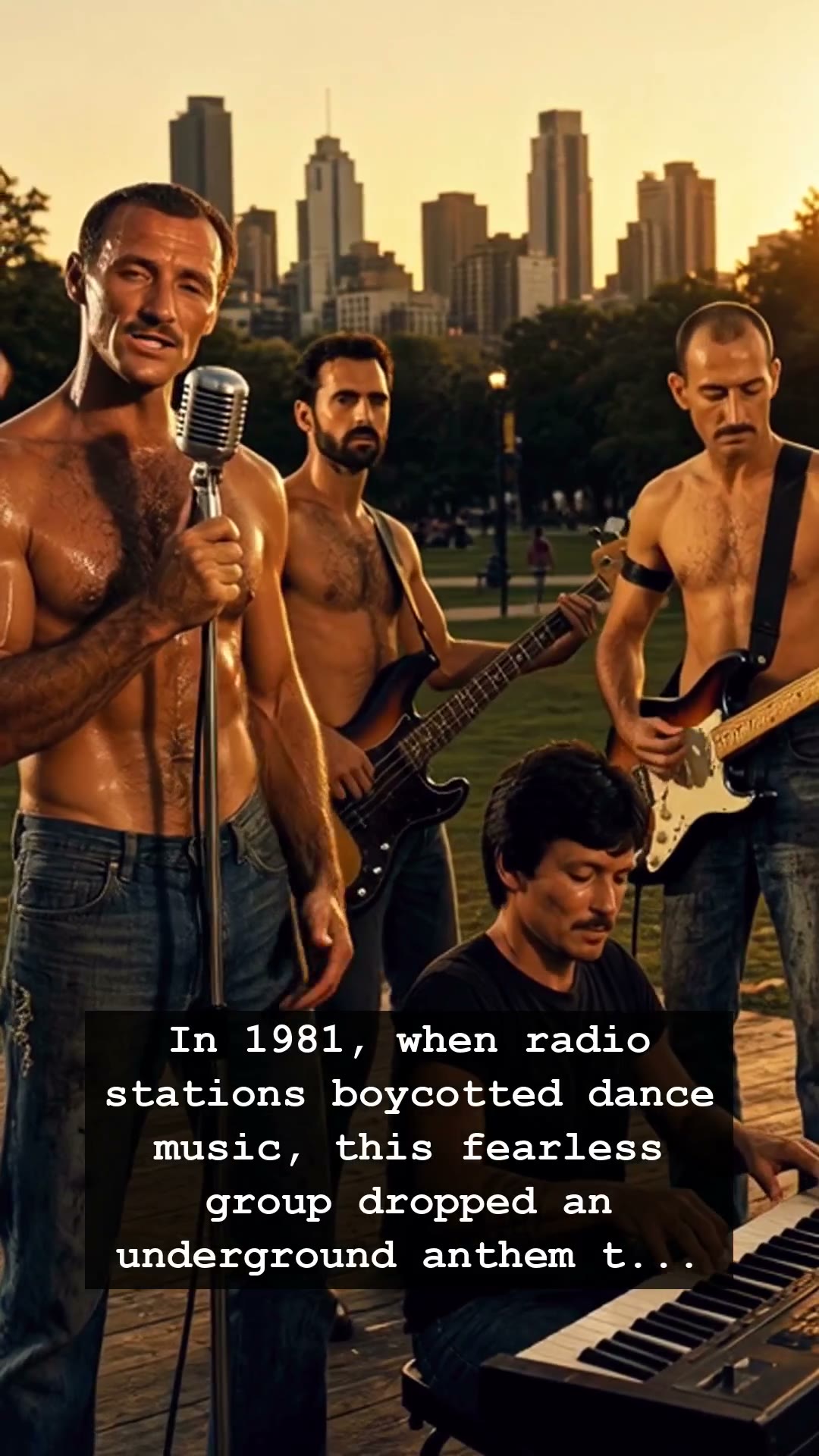
It was 1981, and the airwaves felt like a battlefield. The Disco Demolition Night in Chicago had left the genre wounded, and mainstream radio stations were aggressively boycotting anything that sounded like a four-on-the-floor dance track. The industry wanted the glitter and the groove dead, hoping to bury it under the weight of burgeoning new genres. Yet, in the heart of San Francisco, a fearless group known as the Boys Town Gang decided that the beat was far from over. When the world turned its back on the dance floor, they dropped an underground anthem that would not only defy the industry but ignite a defiant movement for music lovers everywhere.
The Boys Town Gang was never just another disco act; they were a vibrant, unapologetic presence that thrived on the fringes where the mainstream dared not tread. Their cover of Can’t Take My Eyes Off You wasn’t just a song; it was a reclamation of joy in a time of cultural hostility. As the synthesizers swelled and the high-energy percussion kicked in, it felt like a direct middle finger to the corporate gatekeepers who deemed dance music persona non grata. The track bled out of underground clubs and into the consciousness of a generation that refused to let the disco era die in silence.
To understand the magnitude of what the Boys Town Gang achieved, one must visualize the landscape of 1981. It was an era of transition, where the heavy pulse of a Jukebox was being challenged by the portability of the Sony Walkman. People were retreating into private listening experiences, yet the Boys Town Gang forced them back into the light of the mirror ball. This was a time when identity and music were inextricably linked, and for many in the LGBTQ+ community and disco aficionados, this song became a rallying cry. It represented the resilience of a sound that was told it had no place in the future.
Behind the curtains, the story of the Boys Town Gang was one of pure, unadulterated passion meeting systemic rejection. They didn’t have the backing of major labels that were busy pivoting to the new wave of synth-pop. Instead, they relied on word-of-mouth, the energy of the dance floor, and a sheer refusal to be silenced. Their production values were sharp, clean, and infused with an urgency that standard radio hits lacked. It was authentic, it was loud, and it captured the exact moment when the spirit of the seventies collided with the cold, restrictive atmosphere of the early eighties.
Today, the legacy of the Boys Town Gang serves as a reminder that the music we love is often defined by the battles it survives. When we look back at the history of pop culture, we often focus on the giants who dominated the charts, but it is groups like the Boys Town Gang who kept the heartbeat of the era alive. They taught us that even when the radio goes silent, the rhythm persists. The next time you hear those familiar chords, remember that it wasn’t just a hit—it was an act of artistic rebellion.