
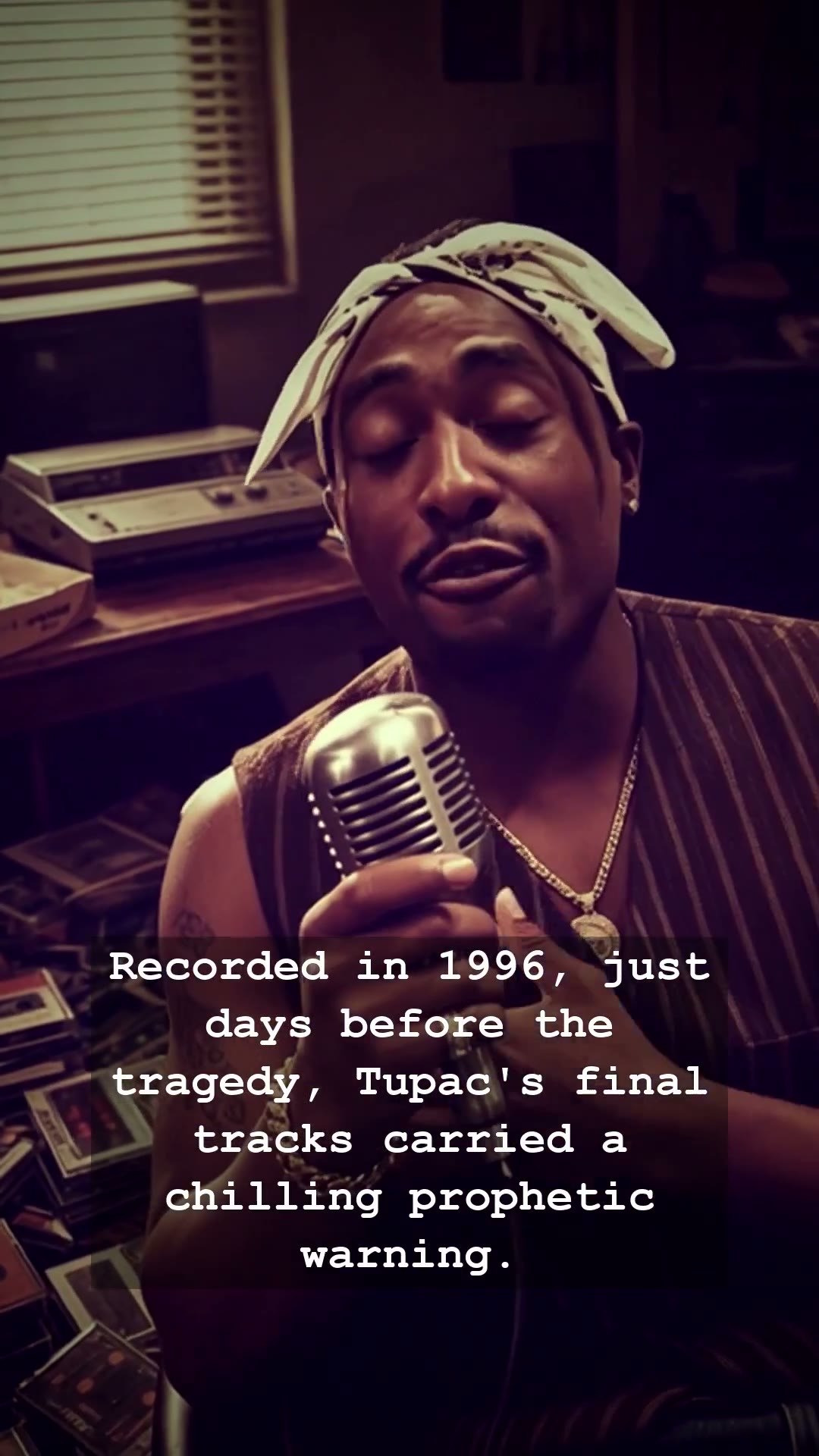
The year was 1996, a summer that felt heavy with an unspoken, creeping dread. While the rest of the world was distracted by the neon glow of the MTV era and the rapid expansion of digital culture, Tupac Shakur was locked away in a studio, racing against a clock that only he seemed to hear ticking. The tracks recorded during those final, feverish sessions—released under the Makaveli moniker—did not sound like typical rap songs. They sounded like someone drafting a final will and testament, etched in the raw, unforgiving grit of the streets. Decades later, listening to those records remains an unsettling experience, as if the air in the room suddenly thins, pulled into the vacuum of a legend whose life was extinguished far too soon.
Tupac was more than just a rapper; he was a cultural earthquake, a man whose intellectual depth often clashed violently with his volatile reality. As the East Coast versus West Coast rivalry spiraled into a fatal obsession, Tupac became the epicenter of a storm that the music industry couldn’t contain. He walked a razor-thin line between poetic brilliance and self-destructive nihilism, and in those final days, his lyrics began to carry a haunting, prophetic weight. When you listen to the Makaveli tracks today, you aren’t just hearing a performer; you are witnessing a man staring into the abyss, fully aware that the shadow of his own myth had finally caught up to him.
The atmosphere of 1996 was thick with tension, a stark contrast to the carefree disco vibes of the decades prior. The media was thirsty for the next big scandal, and Tupac provided a narrative that was impossible to look away from. Behind the scenes, the pressures were suffocating. The paranoia that permeated his later work wasn’t just artistic posturing; it was the documented mental state of a young man who felt the walls closing in. He spoke of death, betrayal, and the cold reality of fame, themes that resonate deeply with anyone who understands the crushing weight of public scrutiny and the loneliness of the spotlight.
What makes the Makaveli records endure is their brutal authenticity. Tupac did not hide his scars, nor did he sugarcoat the violence of his environment. He chose to immortalize his fears, giving us a glimpse into the psyche of a man who knew his time was running out. Every time his voice cracks through the speakers, there is a tangible sense of grief for what might have been. He was a beacon for a generation lost in the transition between the analog world and the modern age, a voice that refused to be silenced even after his physical body was taken from the streets of Las Vegas.
The legacy of Tupac Shakur is not just found in the records he sold or the charts he topped; it is found in the way his words continue to haunt the collective memory. He was a complex architect of his own destiny, and his final days serve as a grim reminder of the high price of creative genius. When the music stops, we are left only with his lingering questions and the haunting realization that he knew his fate long before the world did. Do you still feel his words today?