
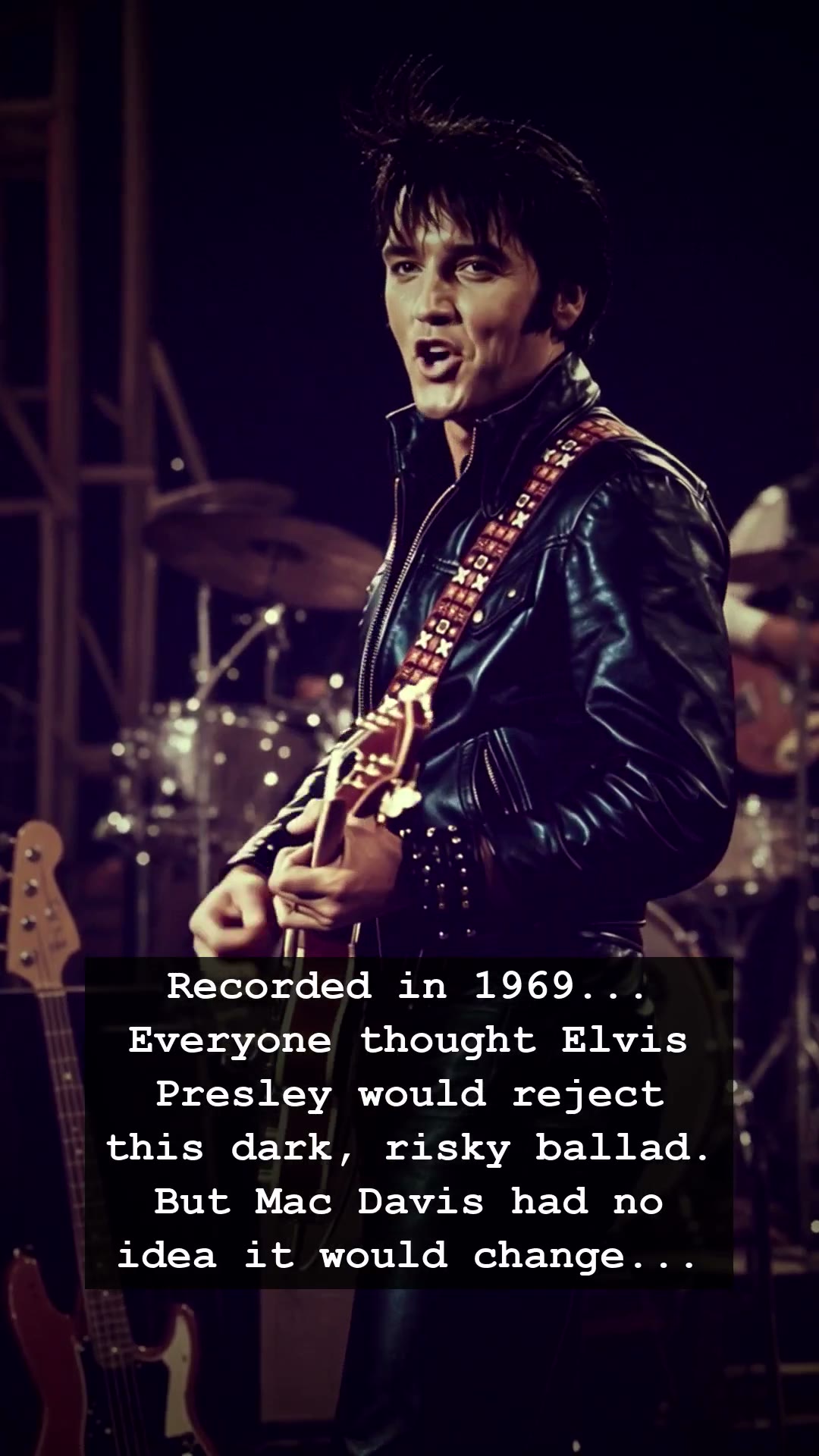
The year was 1969. The neon lights of Memphis flickered with uncertainty as a king fought to reclaim his throne. Elvis Presley had spent the better part of the decade trapped in a cycle of mediocre motion pictures and forgettable soundtracks, while the cultural landscape shifted toward the raw, rebellious energy of Woodstock and the psychedelic revolution. He needed a miracle, or at the very least, a song that could pierce through the noise of a rapidly changing America. Enter Mac Davis, a hungry songwriter who carried a dark, gritty ballad in his pocket that would soon become the most significant gamble of both their lives. The song was In the Ghetto, a stark narrative about the cycle of poverty in Chicago, a stark departure from the romantic crooning that had built the Presley empire.
When Mac Davis first presented the track, the atmosphere in the room was thick with tension. The ballad was unapologetically bleak, a social commentary that felt miles away from the polished pop sensibility of the era. Mac Davis was terrified. He feared that Elvis Presley, the man synonymous with teenage heartthrobs and upbeat rockabilly, would outright reject a song that dealt with hunger, death, and the harsh realities of urban life. It was a risky move, a creative collision that could have easily alienated the fanbase that remained loyal to the King. Yet, as the recording session at American Sound Studio began, something shift in the air. The grit in Elvis’s voice found a home in the lyrics, transforming the song from a simple folk tune into an aching, universal masterpiece of human despair.
This was not just another record; it was a desperate clawing back at relevance. For those of us who lived through the era of the Walkman and the crackle of a worn-out vinyl spinning on a Jukebox, this moment feels like a turning point in music history. The success of In the Ghetto proved that the audience was ready to see the man behind the gold-lamé suit. Elvis Presley was no longer just a caricature of the fifties; he was a human being grappling with the same heavy shadows that haunted the rest of the country. The song reached the masses at a time when the world was becoming increasingly fractured, bridging the gap between the rock ‘n’ roll dreamers and the reality of the streets.
Looking back, the synergy between the songwriter and the superstar remains one of the most compelling stories of the late twentieth century. Mac Davis eventually went on to become a powerhouse in his own right, but he never forgot that late-night session in 1969. It remains a testament to the fact that sometimes, the greatest artistic breakthroughs occur when we are most afraid to take the leap. The raw emotion packed into those few minutes of tape defined a comeback for the ages and solidified the legacy of both men.
Today, when we listen to that haunting melody, we are transported back to a time when music held the power to stop the world in its tracks. It reminds us that even when the light seems to fade, a single, honest story can change everything. As the final notes of the strings swell and fade, we are left with the echoing truth of a masterpiece that dared to be different. It is a reminder that legends are not just made of fame, but of the courage to embrace the darkness and turn it into something unforgettable.