
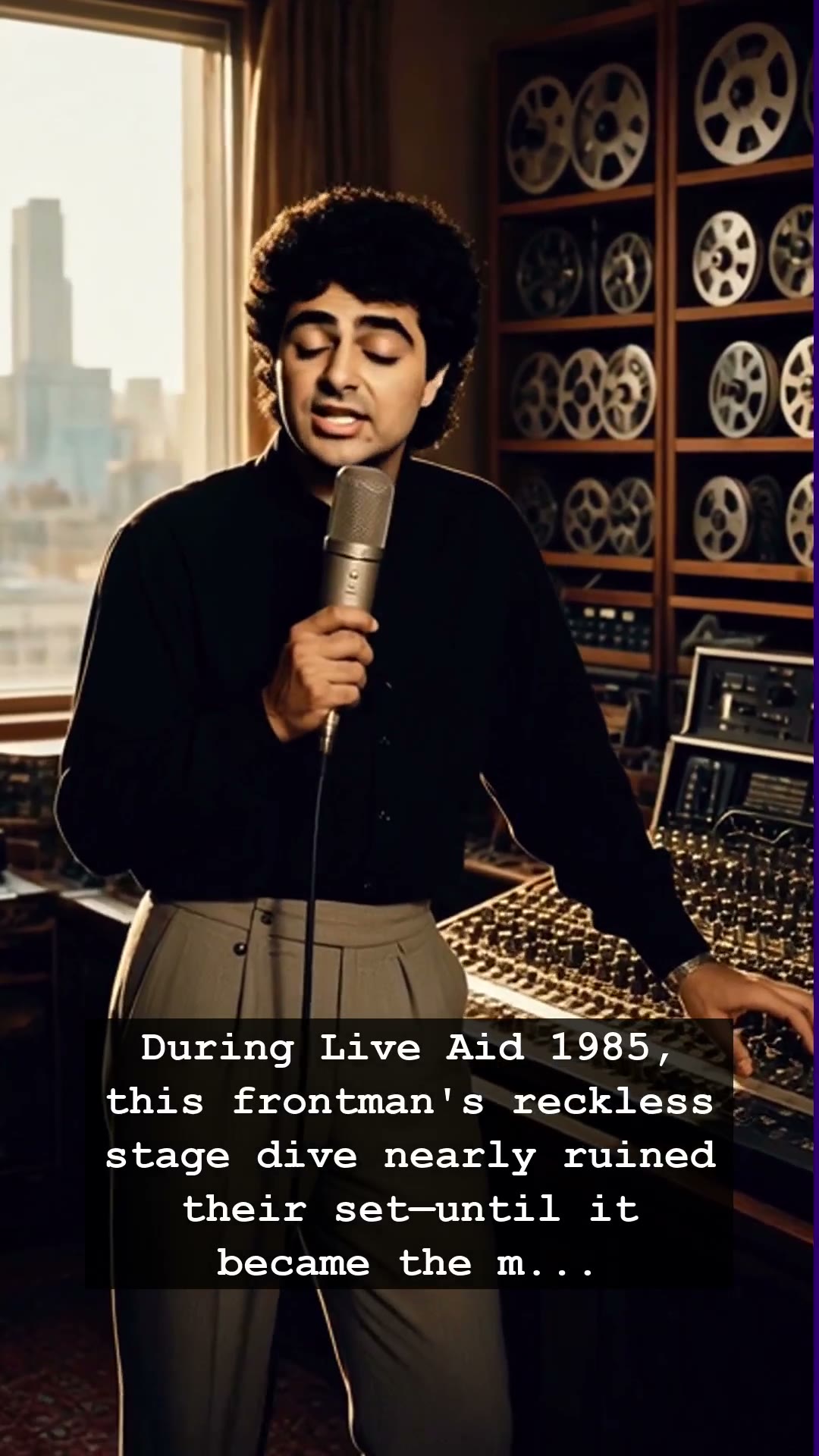
The year was 1985, a time when the world felt smaller, connected by the crackling static of radio broadcasts and the glowing warmth of television screens. It was the era of the Walkman and the MTV generation, a period when music wasn’t just entertainment; it was a cultural force capable of shifting global consciousness. On July 13, 1985, the eyes of the world were fixed on Wembley Stadium for the monumental Live Aid concert. Among the titans of industry, a young, hungry U2 took the stage, eager to prove their worth. But in a moment of pure, unscripted chaos that nearly brought their performance to a grinding halt, Bono did something that would forever be etched in the annals of rock and roll history.
As the band delved into a sprawling, emotive version of Bad, the atmosphere shifted. The song was a haunting exploration of heroin addiction, a gritty reality far removed from the polished sheen of the mid-eighties pop scene. Suddenly, swept up in the raw electricity of the crowd, Bono decided to leave the safety of the stage. He vaulted into the sea of screaming fans, his reckless impulse creating a terrifying silence in the band’s rhythm section. Back on stage, the members of U2 were panic-stricken. They believed they had completely ruined their set by losing their frontman, turning a twelve-minute broadcast window into a disaster. They couldn’t hear the singer; they couldn’t see him. For a few agonizing moments, it felt like the dream was crumbling.
But as the cameras zoomed in, the world witnessed something profound. A girl from the front row had been pulled up by Bono, and the two were locked in an impromptu, graceful dance amidst the frenzied movement of the crowd. It wasn’t a choreographed stunt or a rehearsed move; it was a genuine, desperate connection between an artist and his audience. That reckless jump, born from the intensity of the moment, transformed a standard set into a legendary spectacle that defined the essence of Live Aid. It was the sheer, unbridled humanity of the performance that resonated with millions watching from their living rooms.
When Bono finally returned to the microphone, winded and triumphant, the energy in Wembley reached a fever pitch. The band regained their footing, and by the time they finished, U2 had been catapulted from a rising indie act into global superstardom. They proved that sometimes, in the heart of a live performance, the most glorious moments are those where control is abandoned entirely. It was a testament to the power of the stage and the unpredictable nature of live music during an era when every note felt like a revolution.
Looking back, that day at Live Aid serves as a bittersweet reminder of a time before the digital perfection of modern concerts. It was a messy, loud, and deeply human moment that still gives us goosebumps today. Whether you were one of the thousands in the stadium or watching the flicker of the event on television, Bono’s leap remains a defining image of the eighties. It serves as a reminder that the best stories in music often happen when the script is thrown out the window. Do you remember the sheer awe of watching that moment unfold, or have you discovered the legend of that day long after the final chord faded away?