
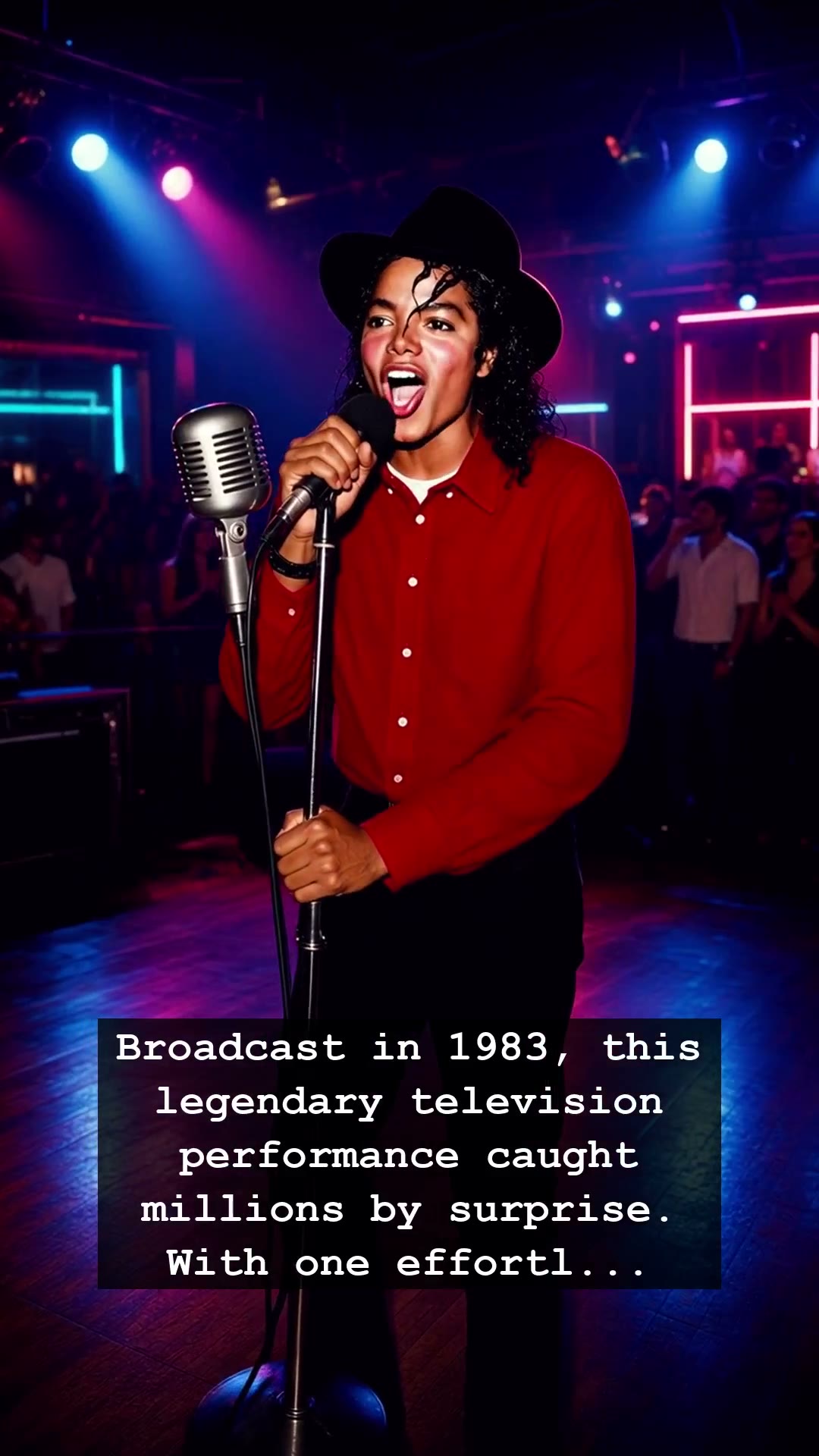
It was May 16, 1983. Outside, the world was evolving at a breakneck pace. The Walkman had redefined how we consumed music, and the neon glow of the new MTV era was beginning to dominate living rooms across America. Yet, for a brief, electrified moment during the Motown 25 anniversary special, time seemed to stand completely still. Millions of viewers sat glued to their cathode-ray tube televisions, waiting for something special, but no one was prepared for the seismic cultural shift that was about to unfold before their eyes. When Michael Jackson stepped into the spotlight, he wasn’t just performing; he was about to cement his status as an immortal figure in the history of music.
As the unmistakable, sharp opening beats of Billie Jean filled the auditorium, the tension in the room was palpable. Michael Jackson moved with a feline grace, his signature black fedora pulled low, a single sequined glove catching the stage lights. He was a man possessed by the rhythm, his movements so precise and fluid they seemed to defy the very laws of physics. Then, it happened. He pulled his body back, pivoted on his toes, and slid backward across the wooden floor. It was the birth of the Moonwalk. In that single, effortless glide, he didn’t just execute a dance move; he shattered the boundaries of pop performance forever.
The audience reaction was visceral. There was a collective gasp, followed by a roar of disbelief that echoed through the decades. For those watching live, it felt like witnessing a magic trick performed by an alien being. Michael Jackson had taken the grit of rhythm and blues, the precision of classic soul, and the theatricality of the disco era, and synthesized them into a singular moment of pure kinetic poetry. It was the pinnacle of a star who had spent his entire life in the public eye, finally stepping into a solo stratosphere that no one else could reach.
Behind the curtains, the pressure leading up to this performance was immense. Michael Jackson was battling the suffocating weight of global fame, a life lived under a microscope where every note and every step was scrutinized. The Motown 25 special was his battlefield, a chance to prove that he was not merely a former child prodigy, but a force of nature capable of defining an entire generation. He didn’t just want to impress; he wanted to hypnotize. He practiced until his feet bled, driven by a perfectionism that would eventually become as legendary as his music itself.
Decades later, we still look back at that grainy footage with a sense of profound wonder. The world of music has moved on to digital synths and algorithmic beats, yet the raw, human impact of Michael Jackson on that stage remains unmatched. It represents a time when television felt like a communal hearth, and a performance could genuinely unite a nation in shock and awe. Do you remember where you were when you saw that glide for the first time? It was the night the world learned that Michael Jackson was not just a pop star, but a revolution in motion.