
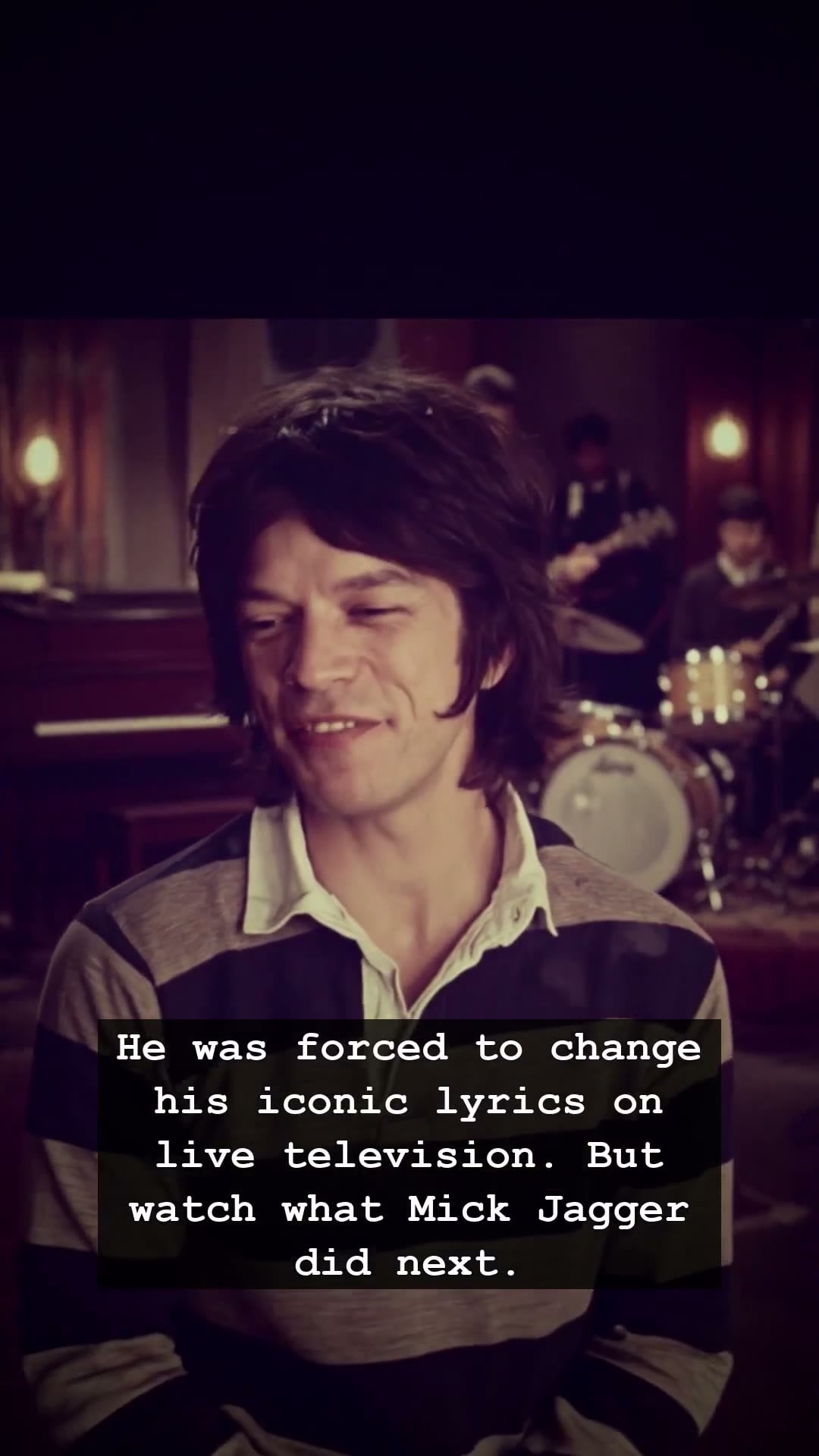
It was 1967, a year defined by the Summer of Love and a palpable, vibrating tension between the conservative establishment and the rising tide of rock and roll youth. The Rolling Stones, led by the magnetic and increasingly provocative Mick Jagger, were invited to perform on the legendary Ed Sullivan Show. For a band that embodied the raw, gritty aesthetic of the British Invasion, this was a pivotal moment in their ascent to global stardom. Yet, in the sterile, brightly lit environment of the network studio, their presence felt like a strike of lightning in a quiet library. The network executives were terrified of what this group of long-haired rebels might project into the living rooms of mid-century America.
The conflict centered on their hit single, Let’s Spend the Night Together. To the censors, the title was a thinly veiled affront to the moral fabric of the era. They demanded a change. Threatened with being blacklisted from the show—a career-ending move in the age of television dominance—Mick Jagger was forced to pivot. He reluctantly agreed to alter the lyrics to the more palatable Let’s Spend Some Time Together. But the man who would eventually become a knight of the realm was never one to be fully tamed by corporate suits. When the cameras finally rolled, the studio lights caught a performance that was dripping with calculated defiance and teenage angst.
As the band began the track, Mick Jagger delivered the mandated lyrics with a theatrical, exaggerated level of disdain. He didn’t just sing the words; he made a spectacle of his own frustration. With every camera pan, he unleashed a series of dramatic eye rolls and bored, sardonic glances that communicated his true feelings louder than any censored lyric could have. It was a masterclass in silent protest, a moment where the internal power struggle between the raw energy of rock and the rigid control of 1960s television was laid bare. The audience at home saw through the sanitized language immediately, witnessing a classic clash of egos that defined the burgeoning rock culture of the decade.
This incident at the Ed Sullivan Show remains a quintessential memory of the mid-sixties. It captures the essence of what it meant to be a rock star before the era of instant internet gratification. Mick Jagger knew the power of his image and the weight of his influence; he understood that by appearing to comply while mocking the process, he was actually heightening his rebellious allure. It was a dance between the artist and the establishment, a dynamic that would continue to play out in stadiums and tabloids for decades to come as he transformed into a global icon of grit and longevity.
Today, the legacy of that night serves as a reminder of the raw, unpolished spirit of the golden age of rock. We look back at those grainy black-and-white broadcasts not just for the music, but for the drama that bubbled beneath the surface. Mick Jagger never needed to scream to prove his point; he simply had to look at the camera, roll his eyes, and let the world know that the music—and the attitude—could never truly be silenced. It was a fleeting moment on a stage, but in the history of music, it remains a vivid piece of folklore that keeps the fire of the sixties burning bright in our collective memory.