
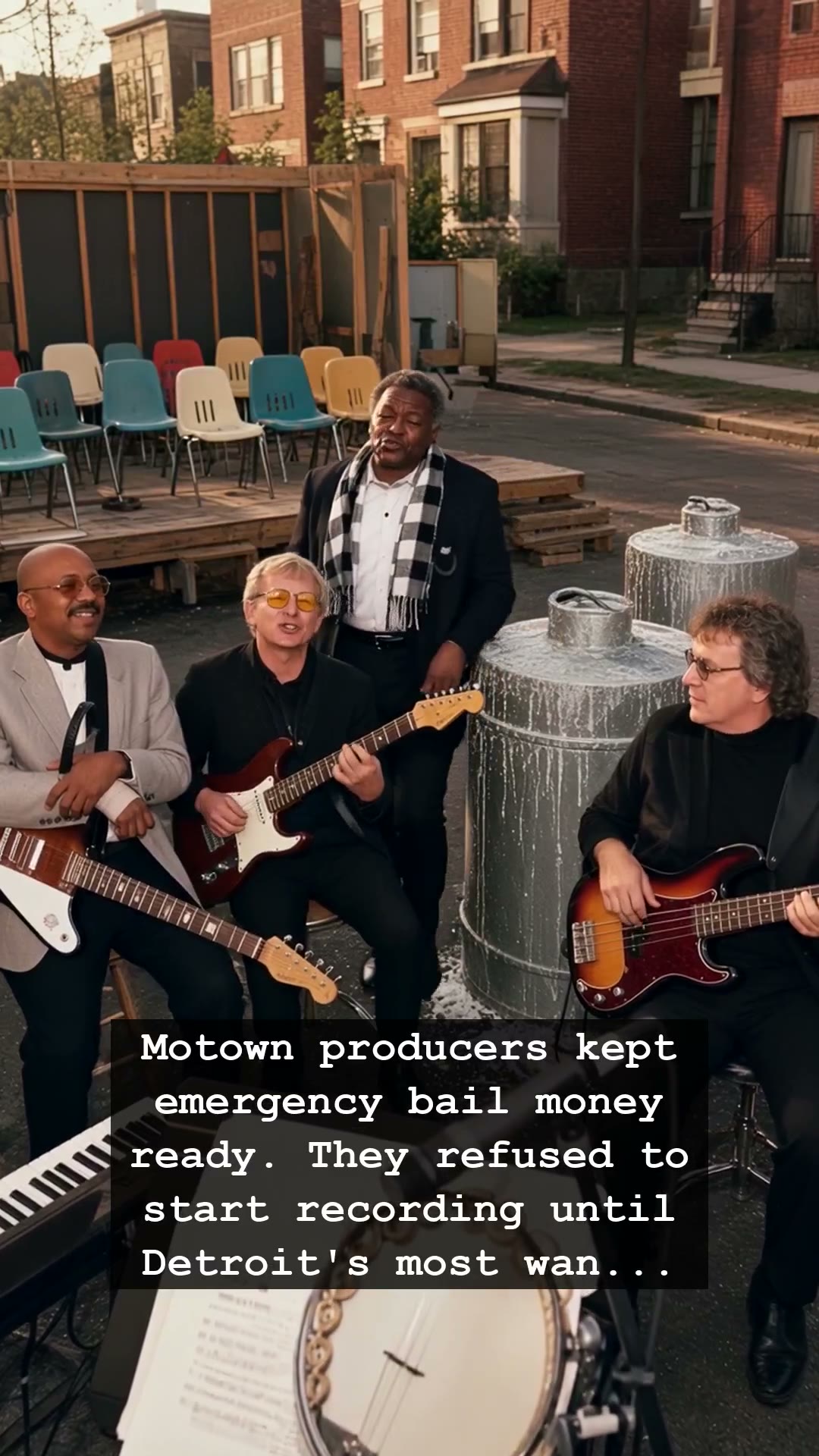
In the golden age of Hitsville U.S.A., a humid night in 1965 Detroit held a secret that could have silenced the heartbeat of American soul music forever. Inside the legendary Studio A, the air was thick with the scent of stale coffee and cigarette smoke, but the tape machine remained motionless. The Funk Brothers, the unsung geniuses behind the Motown sound, sat in tense silence. Berry Gordy, the architect of this musical empire, didn’t care about the clock. He had a standing emergency fund, a literal pile of bail money, ready to be deployed. They refused to hit record until the city’s most wanted, yet most irreplaceable, drummer was physically dragged from a cold Detroit jail cell and placed behind his kit.
This was the reality of the Funk Brothers, an elite collective of session musicians who played on more number-one hits than the Beatles, Elvis Presley, and the Beach Boys combined. While Diana Ross and the Temptations took the spotlight, it was the rhythm section that provided the backbone of the era. Among them, the drummers were the clockwork that made the magic happen. To lose one of them to the precinct was to lose the very momentum that fueled the Motown machine. These men were not just musicians; they were the street-hardened pulse of an industrial city that worked as hard as it played.
It is difficult for modern ears, accustomed to the pristine perfection of digital beats, to comprehend the raw atmosphere of those sessions. Back then, there was no room for error. When the Funk Brothers locked into a groove, the entire room vibrated with a kinetic energy that defined the sixties. The drama was real, the stakes were high, and the lifestyle was as gritty as the asphalt of Hitsville. Sometimes, the genius came with a heavy price tag of personal demons, arrests, and midnight brawls, yet the music never suffered. Every hit record was essentially a miracle, born from chaotic nights and salvaged from the brink of catastrophe.
These artists were the true architects of our cultural nostalgia. When you drop the needle on a vintage record today, or hear that iconic, crisp snare hit on an old radio broadcast, you are hearing the sweat and the desperation of the Funk Brothers. They lived on the razor’s edge, moving between the neon glare of fame and the shadow of their own troubled lives. The fact that their legendary drummer had a reserved spot in the local lockup is a testament to the unpredictable, high-octane spirit of a transformative decade in American music history.
Decades later, the legend of the Funk Brothers continues to resonate because it feels dangerously human. We don’t just love their tracks for the melody; we love them for the story of resilience and the undeniable chemistry that thrived under pressure. Today, their legacy remains a reminder that greatness is rarely clean or quiet. It is often loud, messy, and occasionally requires a bit of bail money to keep the music playing until sunrise.