
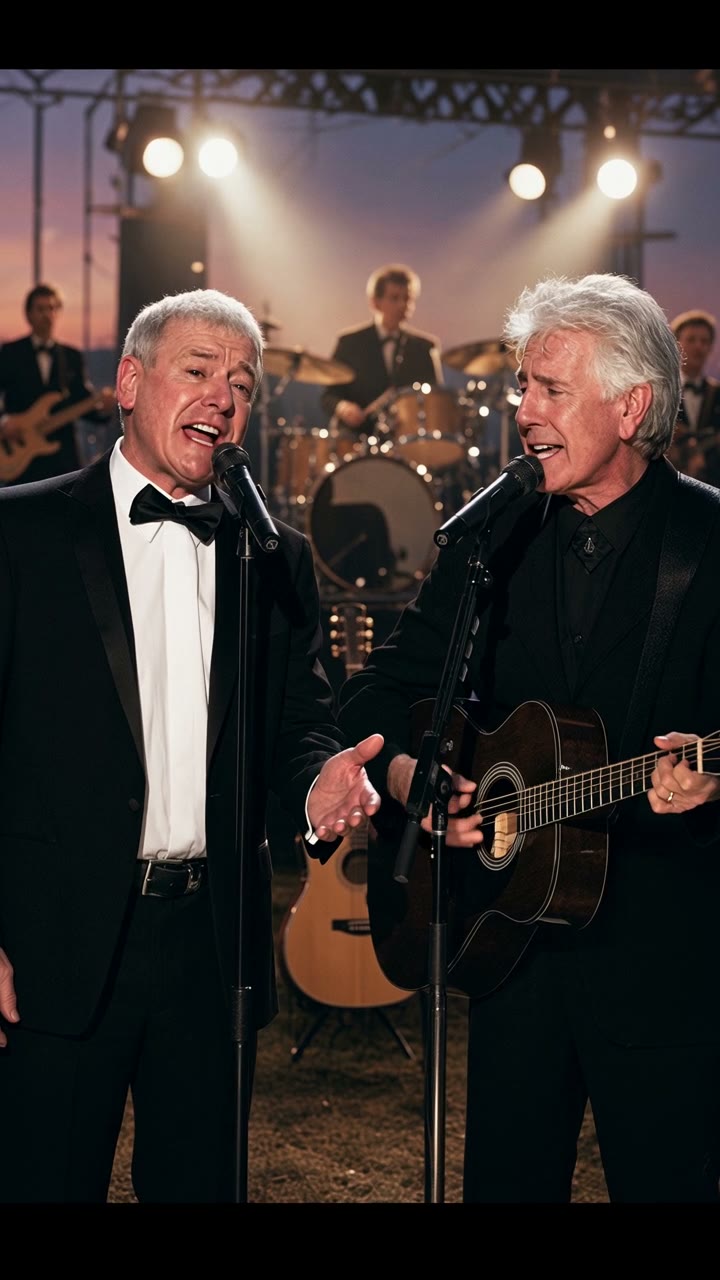
In 1968, the sound of the British Invasion was synonymous with the crystalline, interwoven vocal harmonies of The Hollies. At the center of this musical phenomenon were Allan Clarke and Graham Nash, two childhood friends from Manchester who had spent years crafting a sonic brotherhood that felt unbreakable. They were more than bandmates; they were a singular entity, their voices locked in a perfect, ethereal dance. But behind the scenes of their pop success, a seismic shift was occurring, a silent fracture that would eventually shatter one of the most iconic partnerships in rock history forever.
The tension began to simmer when the cultural landscape of the late sixties started to shift from the polished pop charts toward the experimental, folk-infused sounds of the counterculture. While The Hollies were delivering hit after hit, Graham Nash felt an undeniable pull toward something more profound. During a trip to Los Angeles and a legendary encounter in Joni Mitchell’s living room, he discovered a new musical language with David Crosby and Stephen Stills. The magnetism was instant and dangerous, representing a path that left the comfortable, hit-making machine of his lifelong band behind. When Nash finally made the decision to walk away from Allan Clarke, the music world was stunned. It wasn’t just a lineup change; it was the dissolution of a lifelong bond.
For Allan Clarke, the departure was deeply personal. He had grown up with Graham Nash, learning to harmonize in their school years, treating their shared microphone like a tether to their shared past. Watching his closest friend trade their chart-topping success for the uncertain, raw horizons of California was a bitter pill. For fans who grew up listening to the Jukebox classics like Carrie Anne and On a Carousel, the silence that followed was palpable. The intricate vocal layering that defined their era seemed to lose a vital, ghostly heartbeat the moment Nash stepped onto that plane.
This drama reflects the broader evolution of the late 1960s, a time when the innocence of early rock began to evaporate under the heat of artistic ambition and self-discovery. The move led to the formation of Crosby, Stills & Nash, a group that would eventually define the Laurel Canyon sound and change the trajectory of folk-rock. Yet, for those of us who cherish the raw, high-pitched urgency of early British harmony, the split remains a poignant tragedy. It reminds us that behind the melodies that soundtracked our Walkman days and teenage dances, there were real lives being torn apart by the relentless pressure of creative growth.
Decades later, the echoes of their final performances together still carry a weight of melancholy. Graham Nash went on to rock history, but the sound he built with Allan Clarke remains a unique artifact of that golden age. Whether you discover their music through crackling vinyl or streaming, the story of their friendship serves as a timeless reminder that even the most beautiful harmonies are fragile things, easily silenced by the changing winds of fate. Do you still remember how those perfect voices made you feel?