
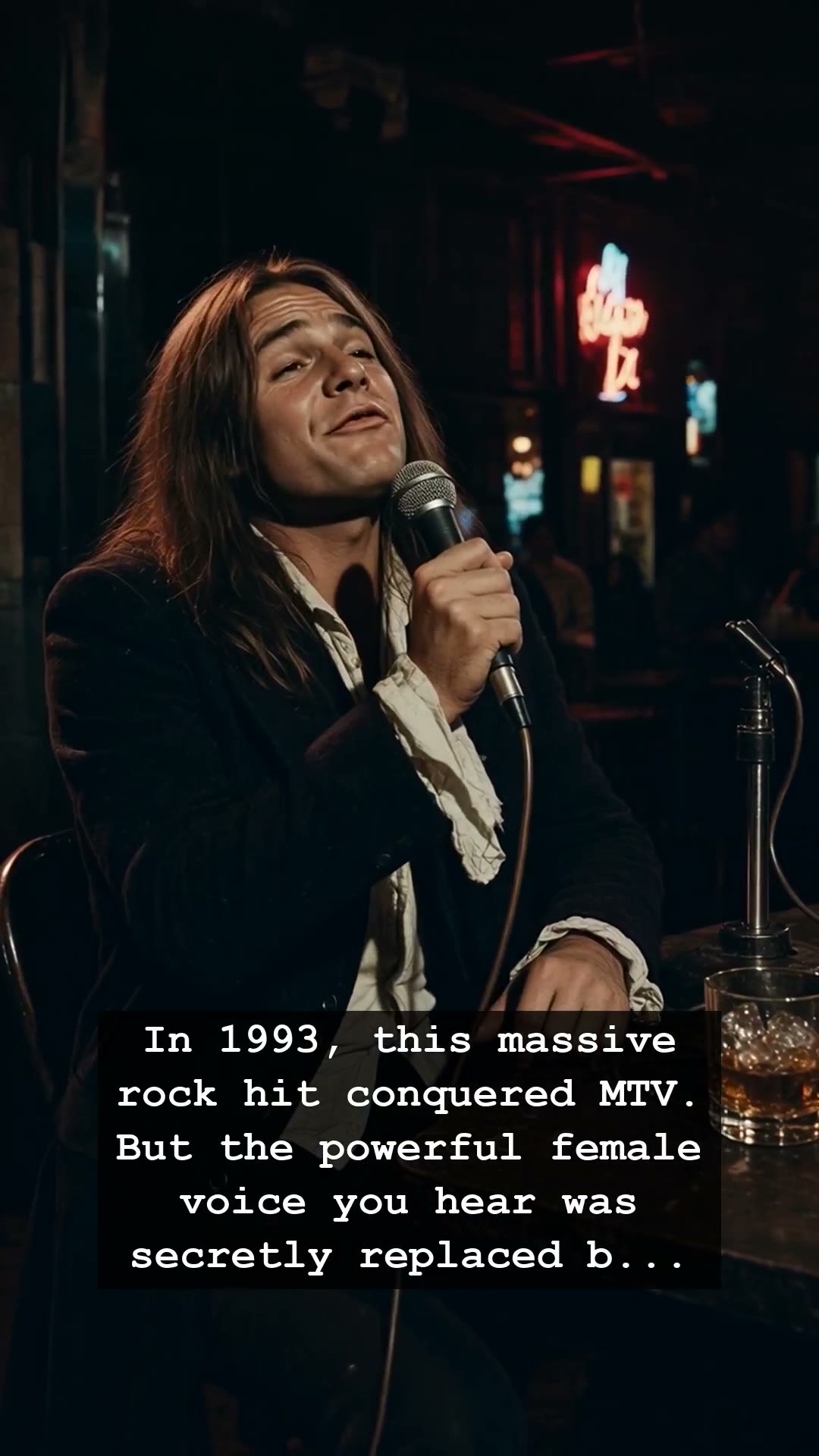
It was 1993, a year when the golden age of Arena Rock felt like a distant, flickering memory, yet one massive ballad managed to stop the world in its tracks. Meat Loaf’s I’d Do Anything for Love (But I Won’t Do That) was an absolute monolith of MTV dominance, a cinematic epic that felt like a bridge between the over-the-top drama of the 80s and the raw introspection of the coming decade. But beneath the layers of operatic production and Meat Loaf’s signature gravel-voiced intensity, there lies a haunting story of a woman whose voice defined a generation’s anthem, only to be erased by the industry’s hunger for visual perfection.
The powerhouse female vocal that anchors the song belongs to Lorraine Crosby, a talented singer whose soul-stirring performance is etched into the very DNA of the track. When the record hit the airwaves, it soared to number one in nearly thirty countries. However, for those of us glued to our television sets waiting for the next premiere, the music video offered a different narrative. In the iconic promo, the woman lip-syncing alongside Meat Loaf was not Lorraine Crosby, but a fashion model. While the world fell in love with the image on screen, the woman who actually poured her heart into those haunting notes was left in the shadows, sidelined by a music industry obsessed with aesthetic marketability over raw artistic contribution.
The tragedy of this situation goes deeper than mere screen time; it was a matter of professional survival. Because Lorraine Crosby was not signed to the record label and the contract terms were devastatingly thin, she received absolutely no royalties from the massive success of the hit. While the song became a permanent fixture of 90s nostalgia, filling jukeboxes and becoming a staple of late-night radio, the woman behind the voice had to watch from the sidelines as the industry cashed in on her talent. It is a chilling reminder of the dark side of fame during the transition from the analog era to the digital age, where images were increasingly curated to sell more than the music itself.
Looking back, the story of Meat Loaf and Lorraine Crosby serves as a poignant chapter in rock history, highlighting how easily a voice can be commodified and detached from its source. It forces us to listen differently when we revisit these classics today. We aren’t just hearing a chart-topping performance; we are hearing the forgotten struggle of an artist who gave everything to a track, only to be edited out of its public legacy. It is the kind of industry betrayal that was far too common in an era where power dynamics often favored the executives over the soul of the performer.
As the years pass and the synth-pop and rock anthems of our youth continue to echo in our minds, let us remember the real faces behind the voices. The next time you find yourself singing along to that dramatic chorus, remember the name Lorraine Crosby. She was the heart of a masterpiece, a voice that refused to be silenced by the machine. Her story remains a vital piece of the history of American music, a reminder that behind every legendary song, there are human stories that deserve to be heard, acknowledged, and celebrated.