
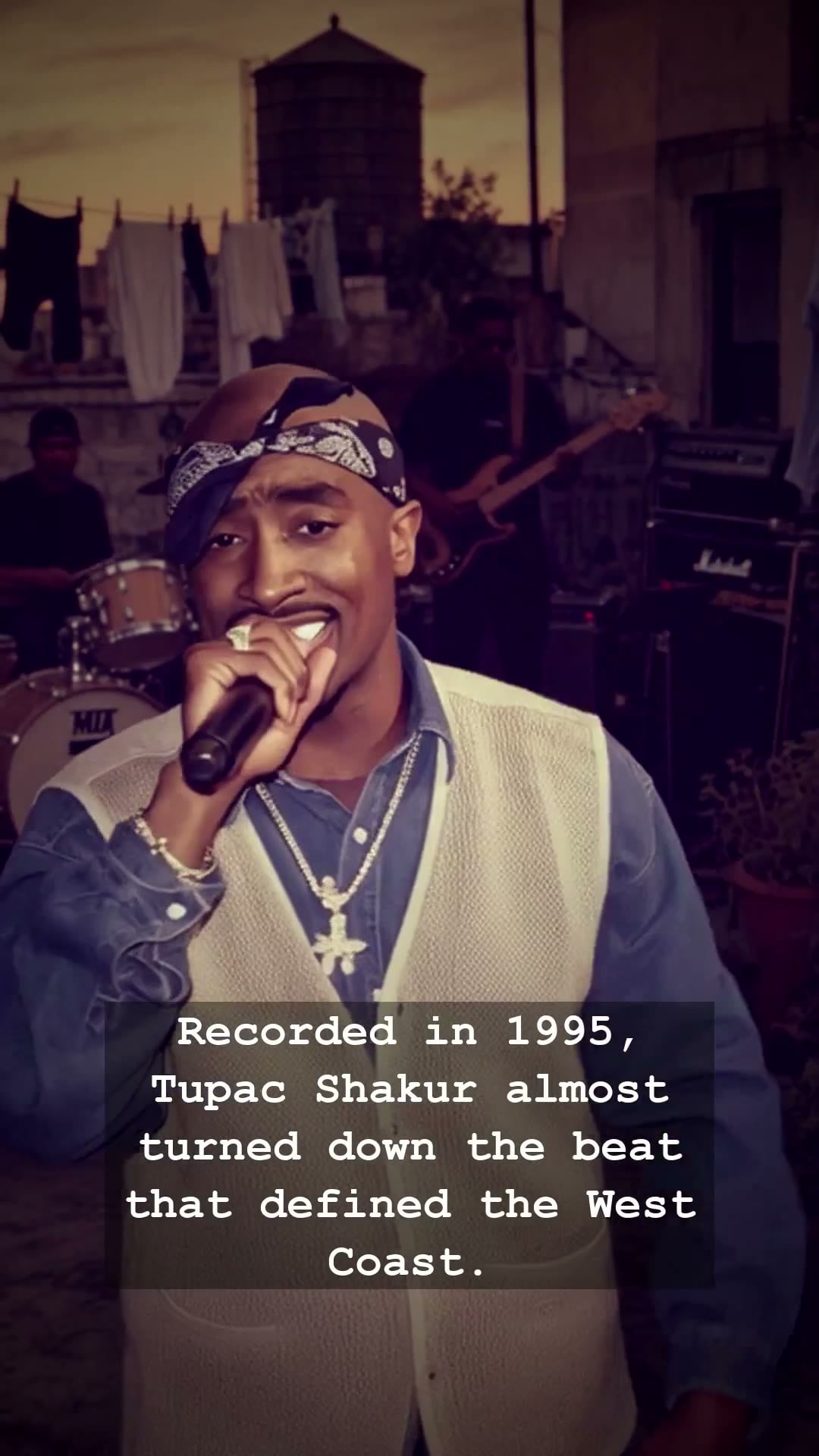
It was 1995, and the air in California felt thick with static. Tupac Shakur had just walked out of prison, his soul charred by the bars of Clinton Correctional, yet his mind was a furnace of unfiltered ambition. He stepped directly into the legendary Death Row Records studio, an environment pulsating with the raw, dangerous energy of the mid-nineties. The world was waiting for his next move, but as history would have it, the anthem that would eventually define the West Coast almost never existed. Dr. Dre was standing there, pushing a beat that sounded like the sonic equivalent of a sun-drenched, high-speed cruise down Sunset Boulevard, but Tupac initially hesitated. He wasn’t sure if that specific rhythm captured the chaotic, beautiful, and violent symphony playing inside his head.
To understand the gravity of that moment, you have to remember the era. This was the golden age of Hip-Hop, a time when the rivalry between the East and West coasts was transitioning from a healthy artistic competition into a lethal powder keg. MTV was the gatekeeper of culture, and the Walkman was our portal to these gritty, unfiltered realities. Tupac Shakur was not just a rapper; he was a revolutionary poet thrust into a world of gang culture and corporate glitz. The beat Dr. Dre offered him that day would eventually become the bedrock of California Love, but in those first few hours, it was just a loop of sound, a musical gamble that could have either cemented his legacy or faded into the background of a crowded radio landscape.
What makes this story so hauntingly nostalgic is the vulnerability hidden beneath the machismo. Tupac Shakur was a man who lived at terminal velocity, constantly balancing between his poetic sensibilities and the dark, inescapable gravity of his street affiliations. When he finally locked into the groove of that beat, something shifted. It wasn’t just about recording a hit; it was about reclaiming his throne. The synergy between Dre’s polished production and Tupac’s visceral, rhythmic delivery turned that studio session into a historic checkpoint. It provided the soundtrack for every low-rider crawling through the streets of Los Angeles, turning an uncertain moment of hesitation into a cultural landmark that echoed far beyond the decade.
Looking back, it is impossible to imagine the nineties without that specific sound. It captured the sunshine and the shadows of the West Coast, a perfect distillation of a brief, volatile period before the tragic escalations that would eventually silence Tupac Shakur forever. The song became more than just a radio staple; it became an identity for a generation. It reminded us that even in the highest echelons of fame, these artists were human beings navigating pressures that few could comprehend, making choices on the fly that would resonate for generations.
Today, when that iconic piano riff drops, we are instantly transported back to that smoke-filled studio in 1995. We remember the intensity in his eyes and the conviction in his voice. Tupac Shakur had a way of making every word feel like an emergency, a desperate attempt to speak his truth before the clock ran out. That is why we still listen, why we still analyze the lore, and why his influence remains an unshakeable pillar of music history. As the sun sets on the era of the cassette tape and the boombox, his voice remains the one thing that never truly fades away.