
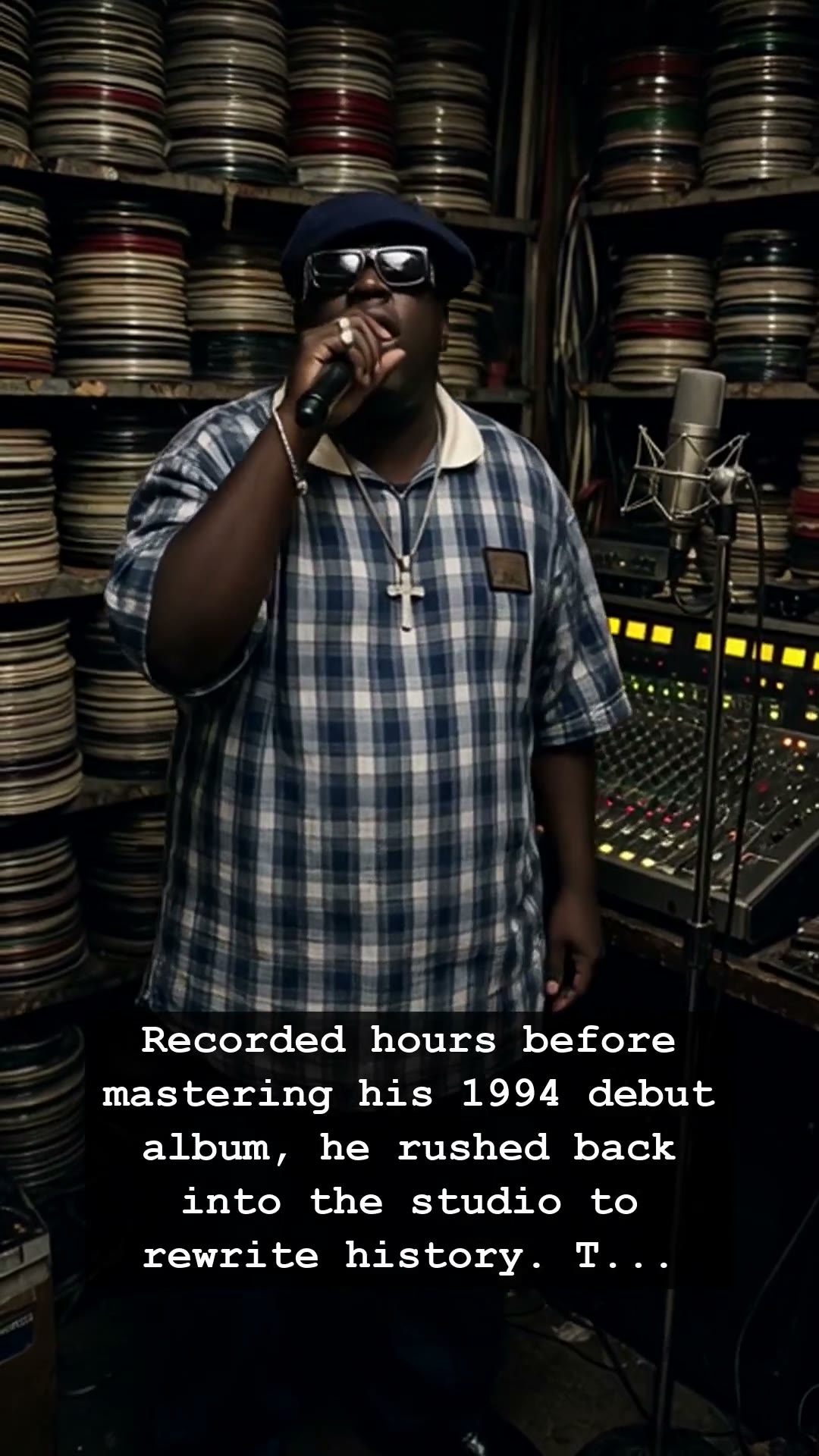
The year was 1994, and the air in New York City was thick with the scent of ambition and the low hum of street-corner radios playing the gritty sound of a new era. Inside a cramped, smoke-filled studio, Christopher Wallace—better known to the world as The Notorious B.I.G.—was staring down a deadline that would determine his place in music history. His debut album, Ready to Die, was essentially finished. The mastering process was hours away, and the industry giants were waiting to hear if this young man from Brooklyn had what it took to lead the East Coast into a new golden age of hip-hop. But Biggie felt something was missing. In a moment of frantic genius, he rushed back into the vocal booth, fueled by a restless creative intuition that would ultimately cement his legend.
He had been pacing the room, his eyes scanning the lyric sheets, knowing that one specific track needed a final punch to truly resonate with the streets. As the clock ticked toward the final master, he grabbed a pen and began to rewrite a verse that he felt captured the duality of his existence: the hunger of the hustler and the artistry of a master poet. When he finally stepped up to the microphone, the atmosphere in the room shifted. There was no hesitation, only the smooth, rhythmic flow of a man who was painting a vivid picture of his reality. He was capturing lightning in a bottle, transforming a standard track into a definitive manifesto of 1990s culture.
That last-minute addition was not just a clever rhyme; it was the soul of the album. It provided the emotional weight that audiences crave, a bridge between the dark, shadowy corners of the crack-era city and the polished aspirations of a rising star. The Notorious B.I.G. possessed an uncanny ability to turn his personal struggles into an epic narrative, one that felt both dangerous and deeply human. By the time he walked out of the studio, the album had transformed from a collection of songs into a cohesive masterpiece that would define the sound of a generation, echoing through the Walkmans of every teenager in America.
The impact was immediate. When Ready to Die hit the shelves, the music landscape changed forever. For those of us who remember those days, hearing The Notorious B.I.G. for the first time felt like discovering a secret language. He brought a sense of cinematic grandeur to the genre, with his deep, raspy voice serving as the narrator of our urban reality. That frantic, late-night decision to rewrite his verse proved that the greatest art often comes from the most pressurized moments of our lives, where the fear of failure is pushed aside by the sheer necessity of expression.
Decades later, the legacy of The Notorious B.I.G. remains untarnished. We still revisit these tracks not just for the beats or the nostalgia, but to remember a time when hip-hop was finding its poetic voice. It serves as a reminder that behind every legendary hit is a human being, agonizing over words until they feel just right. So, the next time you hear that familiar opening beat, listen closely to the cadence and the grit. You are hearing the sound of a man rushing against time, determined to leave behind a story that would outlive us all. Do you still remember where you were the first time those words hit your speakers?