
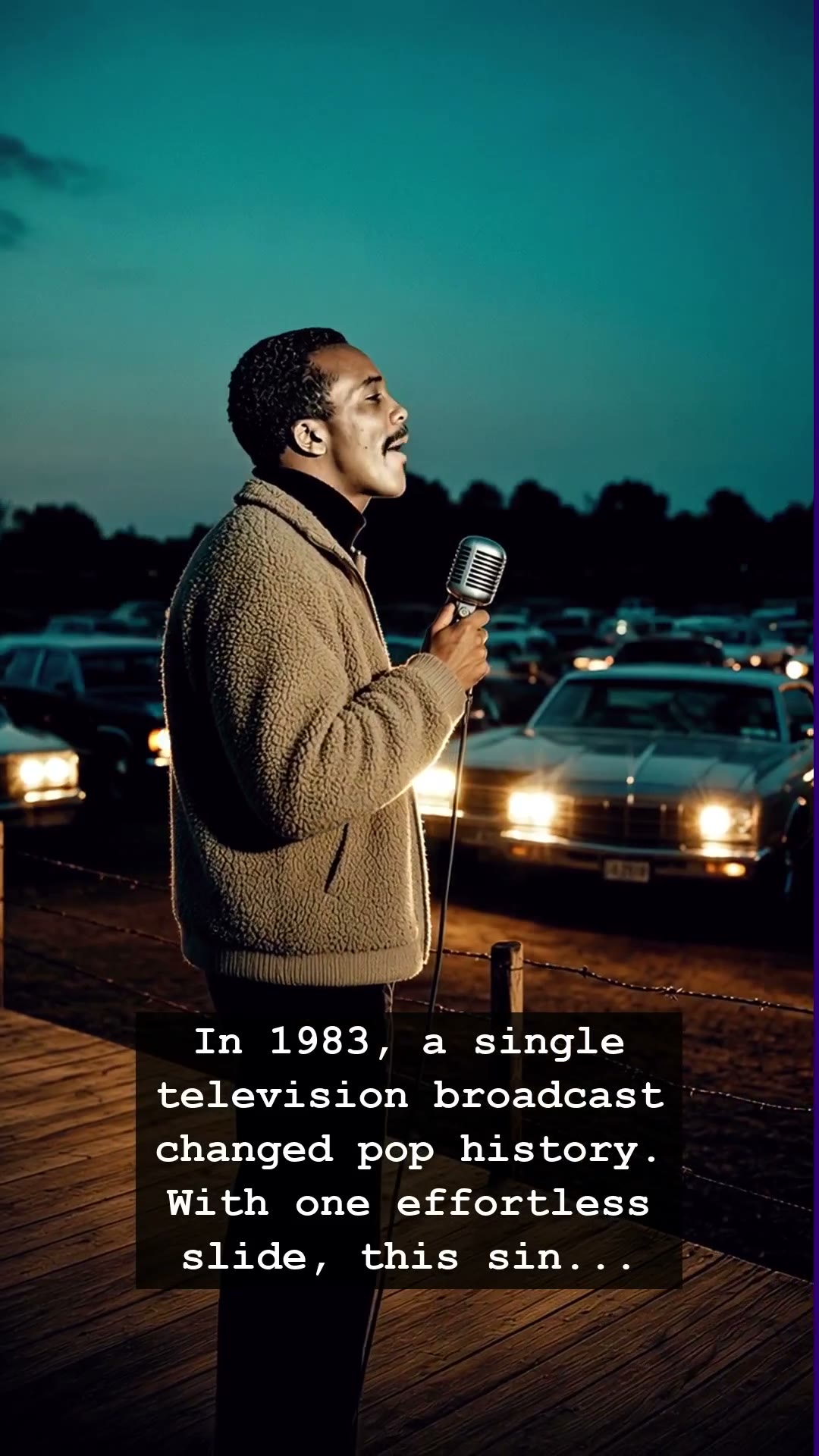
It was May 1983, and the world was gathered around their television sets for the Motown 25: Yesterday, Today, Forever special. The air felt electric, buzzing with the promise of legendary reunions and nostalgia. Yet, no one was prepared for the moment Michael Jackson stepped into the spotlight alone, dressed in a black sequined jacket and a single shimmering glove. As the driving, synth-heavy beat of Billie Jean filled the arena, the audience witnessed more than just a dance performance; they watched the birth of a global phenomenon that would define the music industry for decades to come.
For nearly four minutes, Michael Jackson commanded the stage with a precision that bordered on the supernatural. His movements were sharp, effortless, and carried a weight of intensity that left the crowd breathless. Then, it happened. He glided backward, defying the laws of gravity and friction. That singular, fluid movement—the Moonwalk—was not merely a dance step; it was a cultural earthquake. In that split second, the world realized that pop music had evolved into something far more visual, visceral, and unstoppable. The era of the high-budget music video and the dance-centric superstar had officially arrived.
Behind the scenes, the pressure on Michael Jackson was immense. He was a young man already bearing the weight of a legendary career that started in his childhood. His drive for perfectionism was legendary, often pushing him to the brink of exhaustion. The Motown 25 performance wasn’t just a gig; it was a reclamation of his artistic identity. He wanted to prove that he was not just a former child star from a soulful vocal group, but a solo powerhouse capable of transcending genres. He spent days rehearsing in his living room, refining the slide until it looked as natural as breathing. This obsession with detail became his trademark, setting a standard for every artist who walked onto an MTV stage thereafter.
In the years following that broadcast, Michael Jackson became the undisputed King of Pop. He moved beyond the limitations of radio airplay, transforming the medium of music into a cinematic experience. The success of his work during the early 1980s turned the record industry into a billion-dollar juggernaut. Every teenager with a Walkman was listening to his tracks, and every aspiring performer was attempting to replicate that iconic slide on concrete driveways and dusty stages. The world was hooked on the drama, the mystery, and the undeniable brilliance of a man who seemed to live in a different dimension of creativity.
Looking back, that night remains a definitive turning point in music history. It reminds us of a time when television events brought a divided nation together, glued to their screens, waiting for magic to happen. Michael Jackson managed to capture the lightning of pure, unadulterated talent and bottle it for a generation that was hungry for icons. Even today, the legacy of that performance lingers in every choreographed beat and every artist who pushes the boundaries of spectacle. When we close our eyes and hear those opening bass notes, we are transported back to 1983, back to the moment the King of Pop took flight, leaving the rest of the world to catch up.