
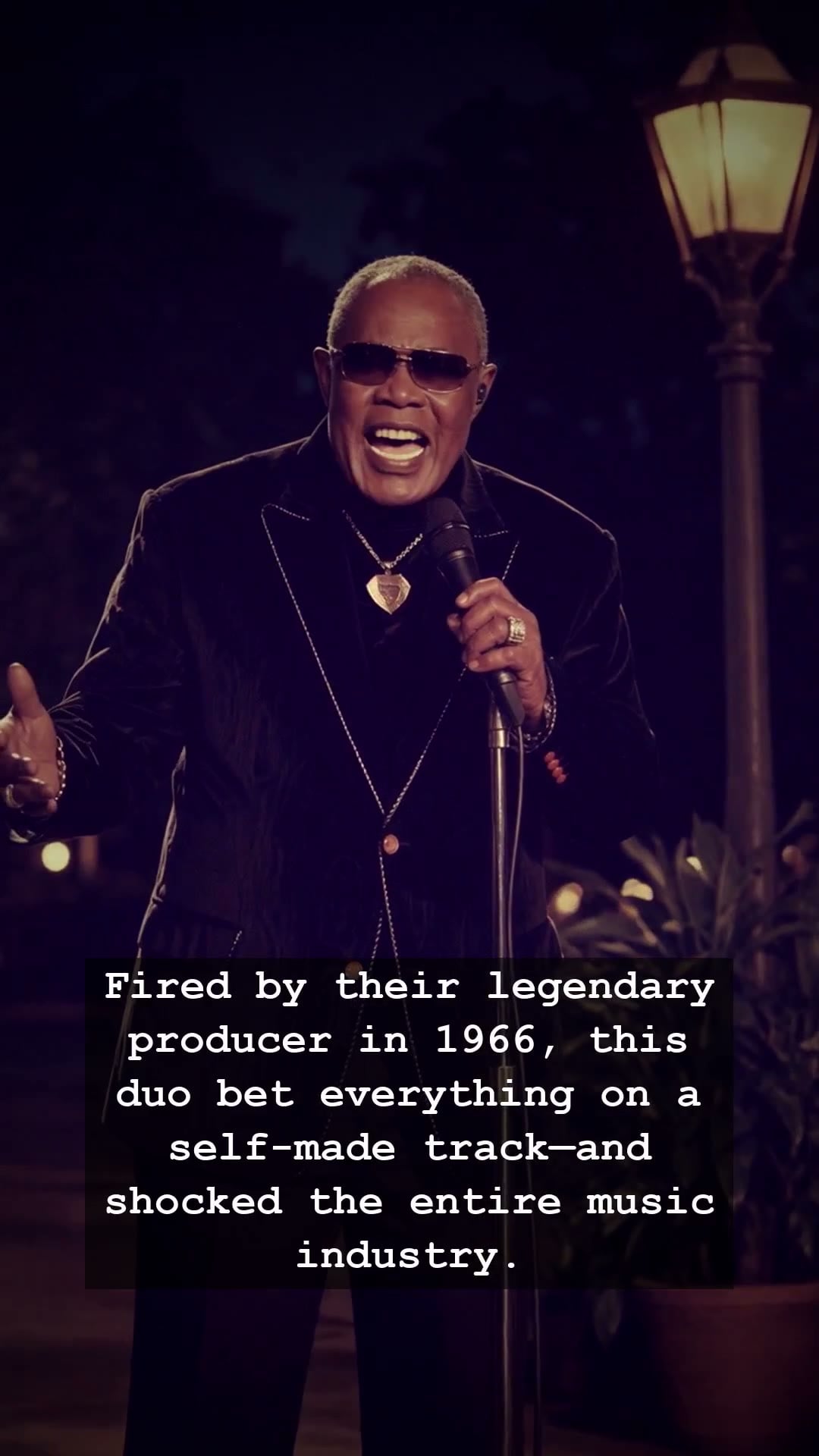
In the cutthroat landscape of the mid-1960s music industry, few things were considered more dangerous than biting the hand that fed you. For The Righteous Brothers, Bill Medley and Bobby Hatfield, the path to stardom was paved by the legendary producer Phil Spector. Known for his intense, uncompromising personality and the iconic Wall of Sound, Spector was the architect of their fame. Yet, by 1966, the friction between the blue-eyed soul duo and their mentor had reached a boiling point. The industry whisperers were certain: walking away from Spector meant commercial suicide. They were effectively firing the man who held the keys to their golden future.
But the duo chose the path of defiance. With their backs against the wall and the pressure of the charts mounting, The Righteous Brothers decided to take control of their own artistic destiny. Locked away in the sanctuary of the recording studio, they began to experiment, stripping back the massive orchestral layers that Spector had made famous. They sought a sound that was rawer, more personal, and deeply rooted in the blue-eyed soul that had originally captivated their growing fanbase. It was a high-stakes gamble; if they failed, they would be written off as nothing more than a footnote in a producer’s long list of successes.
The resulting track was a revelation. When they finally emerged from the studio with their self-produced work, the industry was left in shock. The song hit the airwaves with a visceral, thunderous clarity that felt entirely new yet hauntingly familiar. It didn’t just climb the charts; it snatched the number one spot, proving that the soulful chemistry between Bill Medley and Bobby Hatfield was the true engine of their success all along. They had effectively engineered their own resurrection, transforming from mere performers under a Svengali into masters of their own sonic kingdom.
Looking back at 1966, this moment serves as a powerful reminder of the turbulent creative energy that defined that decade. It was an era where the Jukebox was king, and artists were constantly fighting to claim ownership over their unique identities against the pressures of high-powered labels and perfectionist producers. The Righteous Brothers proved that even under the shadow of a giant, true talent possesses an irrepressible gravity of its own. Their gamble wasn’t just about a hit record; it was a manifesto for independence in an era defined by mass production.
Today, the legacy of The Righteous Brothers continues to echo through the halls of rock history. Their journey from the shadow of the Wall of Sound to the pinnacle of independence remains a masterclass in artistic integrity. Whenever we hear those unmistakable, haunting melodies today, we are reminded of that pivotal year when two men refused to back down. They taught a generation that sometimes, to find your true voice, you have to be brave enough to silence the noise around you and trust your own rhythm.