
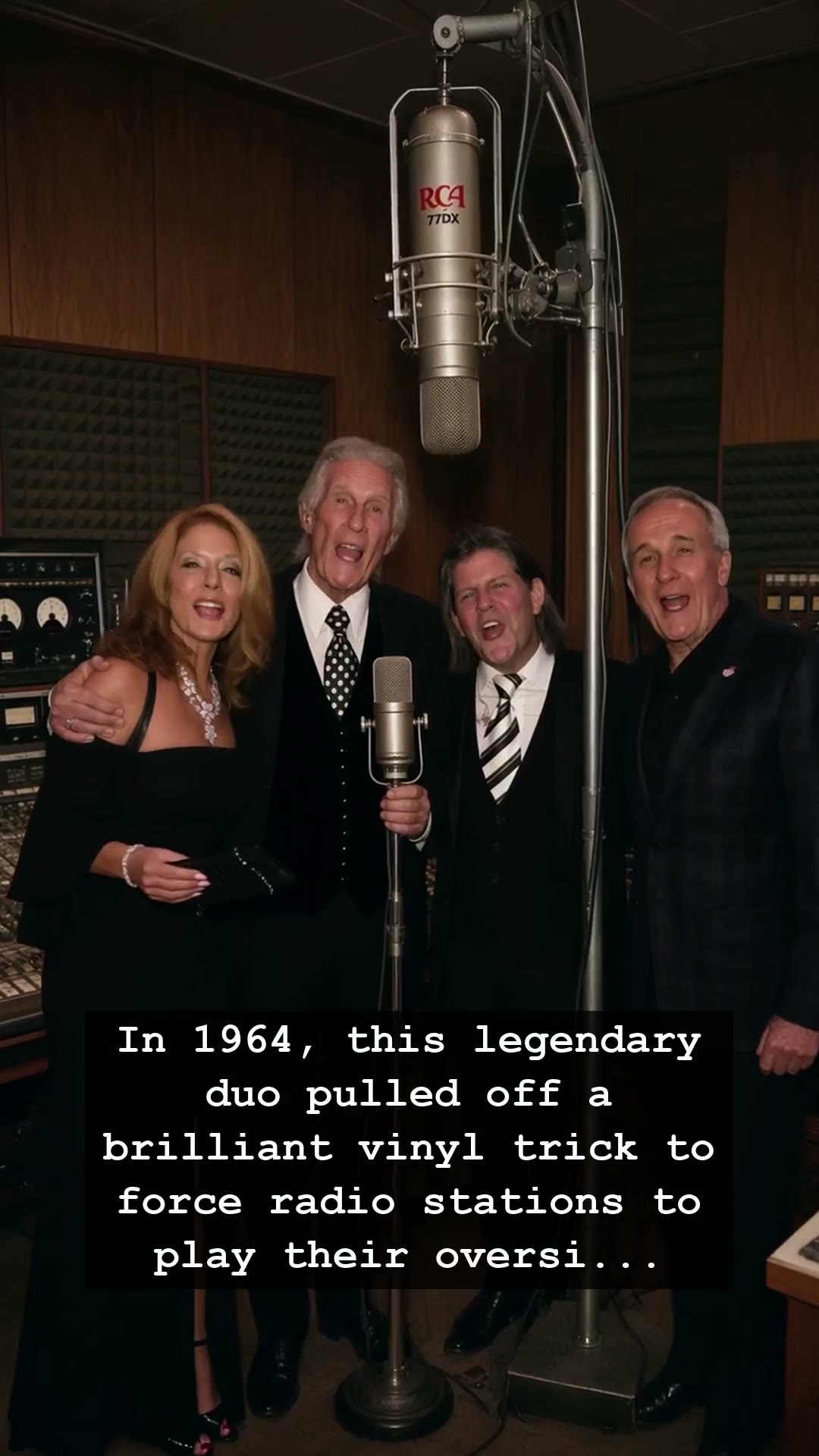
The year was 1964. The airwaves were dominated by the punchy, three-minute pop ditties that radio programmers demanded. In that era of rigid formatting, if a song stretched too long, it was destined to be buried in the archives, ignored by the gatekeepers of Top 40 radio. But Bill Medley and Bobby Hatfield, the iconic duo known as The Righteous Brothers, were sitting on a masterpiece that defied every rule in the book. Their legendary track, You’ve Lost That Lovin’ Feelin’, was a soul-drenched, orchestral epic that clocked in at nearly four minutes. To a radio station in 1964, that extra minute was an eternity of dead air. Faced with the certainty that their record would be rejected, the duo and their legendary producer Phil Spector devised a deceptive, brilliant vinyl trick that would change music history forever.
On the physical copies of the record sent to radio stations, the label explicitly stated the length of the song as a standard, radio-friendly three minutes and five seconds. It was a bold-faced lie, a piece of industrial camouflage designed to bypass the iron-fisted censors of the mid-sixties. When DJs finally slipped the record onto the jukebox or the turntable, they were already committed to the groove before they realized the song was significantly longer. By the time the final, soaring crescendos of the track hit, it was already too late—the listeners were hooked. The Righteous Brothers had successfully infiltrated the airwaves with their Wall of Sound, proving that artistic ambition could triumph over bureaucratic constraints.
This act of rebellion is a quintessential snapshot of a golden age in American music. The Righteous Brothers represented a bridge between the raw emotion of early blue-eyed soul and the sophisticated, symphonic production techniques that defined the mid-sixties. While teenagers were crowding around their transistor radios or dancing in dimly lit diners, The Righteous Brothers were crafting a sound that felt both intimate and grand. Their music echoed through the halls of history, capturing the heartbreak and longing of a generation caught between the innocence of the early fifties and the looming cultural shifts of the late sixties.
Beyond the chart-topping success, there was a quiet, haunting intensity to the partnership between Bill Medley and Bobby Hatfield. Their contrasting vocal ranges—Medley’s booming, resonant baritone and Hatfield’s soaring, fragile tenor—created a sonic tension that few could replicate. Yet, beneath the glamour of the spotlight, the pressure to maintain that standard was relentless. The music industry in the sixties was a pressure cooker of talent, ego, and chemical-fueled late nights in the recording studio. The Righteous Brothers were not immune to these shadows, often finding themselves at the mercy of their own meteoric rise.
Today, when we hear the opening notes of their most famous hit, we aren’t just listening to a song; we are transported back to a world of black-and-white television and the crackle of a vinyl record hitting a needle. That 1964 trick remains a testament to the fact that sometimes, to make a true impact, you have to break the rules. The Righteous Brothers left an indelible mark on the soul of American music, a legacy that continues to resonate with anyone who has ever felt the sting of a lost love or the triumph of a perfect melody. As the music fades into memory, we are reminded that some legends are built on more than just talent—they are built on the audacity to be heard, no matter the cost.