
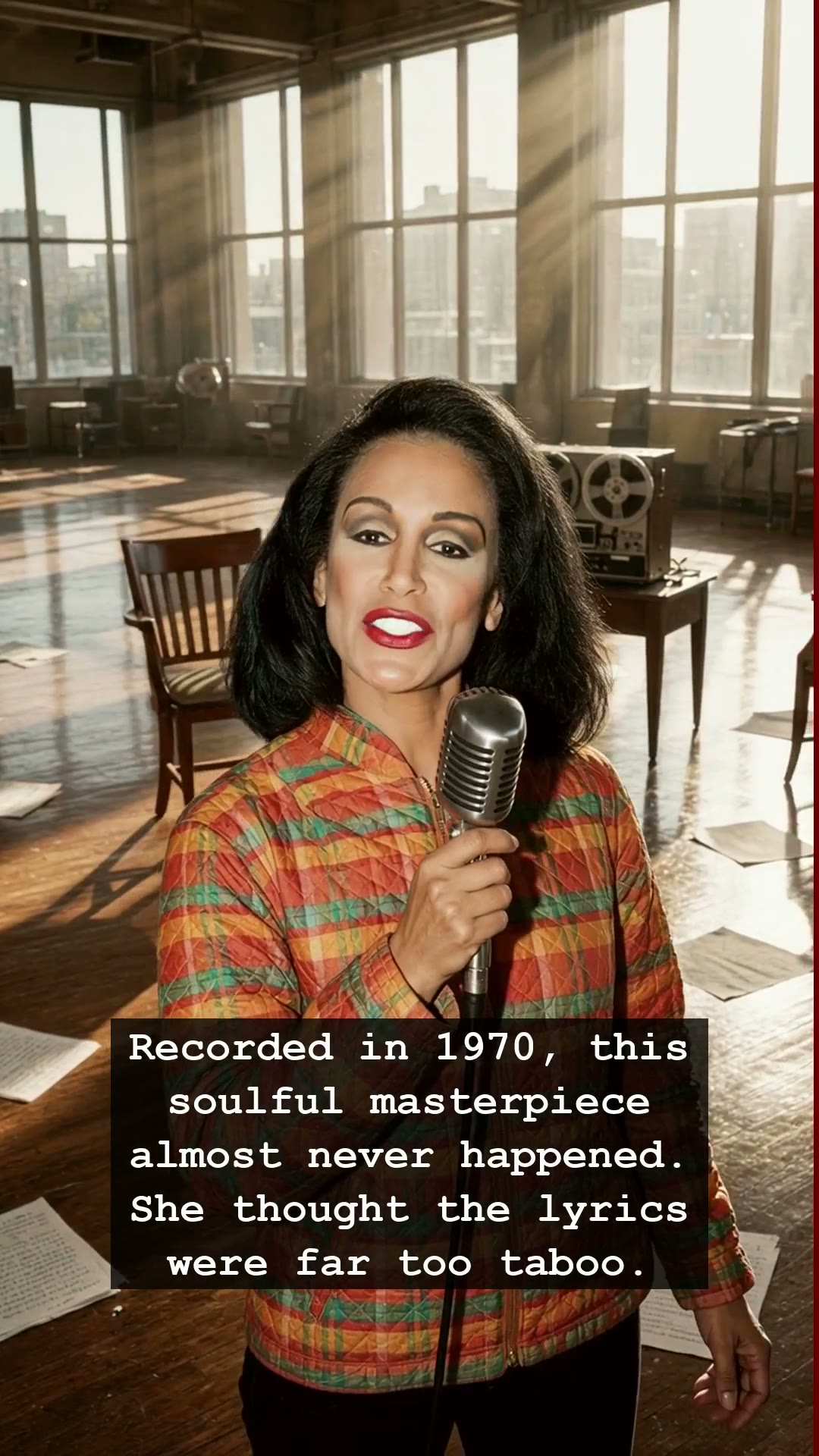
The year was 1970, and the airwaves were vibrating with the transition from the psychedelic haze of the late sixties into the polished, soulful sophistication of a new decade. In the velvet-lined rooms of Detroit’s legendary studios, a woman stood before a microphone, staring at a sheet of paper with genuine trepidation. Freda Payne, a seasoned vocalist known for her elegant, mature presence, was facing a creative crisis that would define her career. The song in question was Band of Gold, a track that would soon dominate the charts, yet at the time, its narrative felt like a dangerous gamble that threatened to dismantle the very image she had spent years cultivating.
The lyrics of Band of Gold told a story that was remarkably bold for the era: a tale of a wedding night left unconsummated, a marriage bed that remained a cold, solitary space. For a polished performer like Freda Payne, the subject matter felt too raw, perhaps even scandalous. She feared the public would view her not as the sophisticated chanteuse she worked so hard to be, but as something far more vulnerable and provocative. She nearly walked away from the session entirely, terrified that these taboo lyrics about a hollow domestic reality would ruin her reputation. The tension in the studio was palpable; it was a battle between artistic sensitivity and the commercial instinct of producers who knew they had lightning in a bottle.
Yet, as the needle dropped on the acetate, something shifted. Freda Payne leaned into the discomfort, delivering a vocal performance that was both heartbreakingly fragile and hauntingly powerful. The song resonated with the millions of Americans tuning in through their car radios and home consoles, catching the cultural zeitgeist just as the world was shifting. It was a time when the Jukebox culture was evolving into the era of the high-fidelity home stereo, and Band of Gold became the anthem that bridge the gap between soulful R&B and the emerging pop sensibilities of the early seventies.
That decision to embrace the controversy propelled Freda Payne to international superstardom. The single sold over a million copies, becoming an enduring signature hit that transcended the radio charts to become a part of the American musical tapestry. Looking back from our modern vantage point, it is easy to forget how much power a song held in those days. Without the heavy rotation on AM radio stations and the dedicated listeners clinging to every note, this story might have been buried in the vaults of Motown-adjacent history. Instead, it serves as a testament to the risks that define legendary status.
Decades later, the song remains a haunting piece of nostalgia, evoking memories of a time when soul music could hold a mirror up to the hidden pains of human relationships. Freda Payne proved that artistic courage is often found in the moments we are most afraid of. As we listen to those familiar strings today, we are reminded that sometimes, the most taboo stories are the ones that resonate the longest. It is a timeless piece of music, a echo of a golden era that refuses to fade away.