
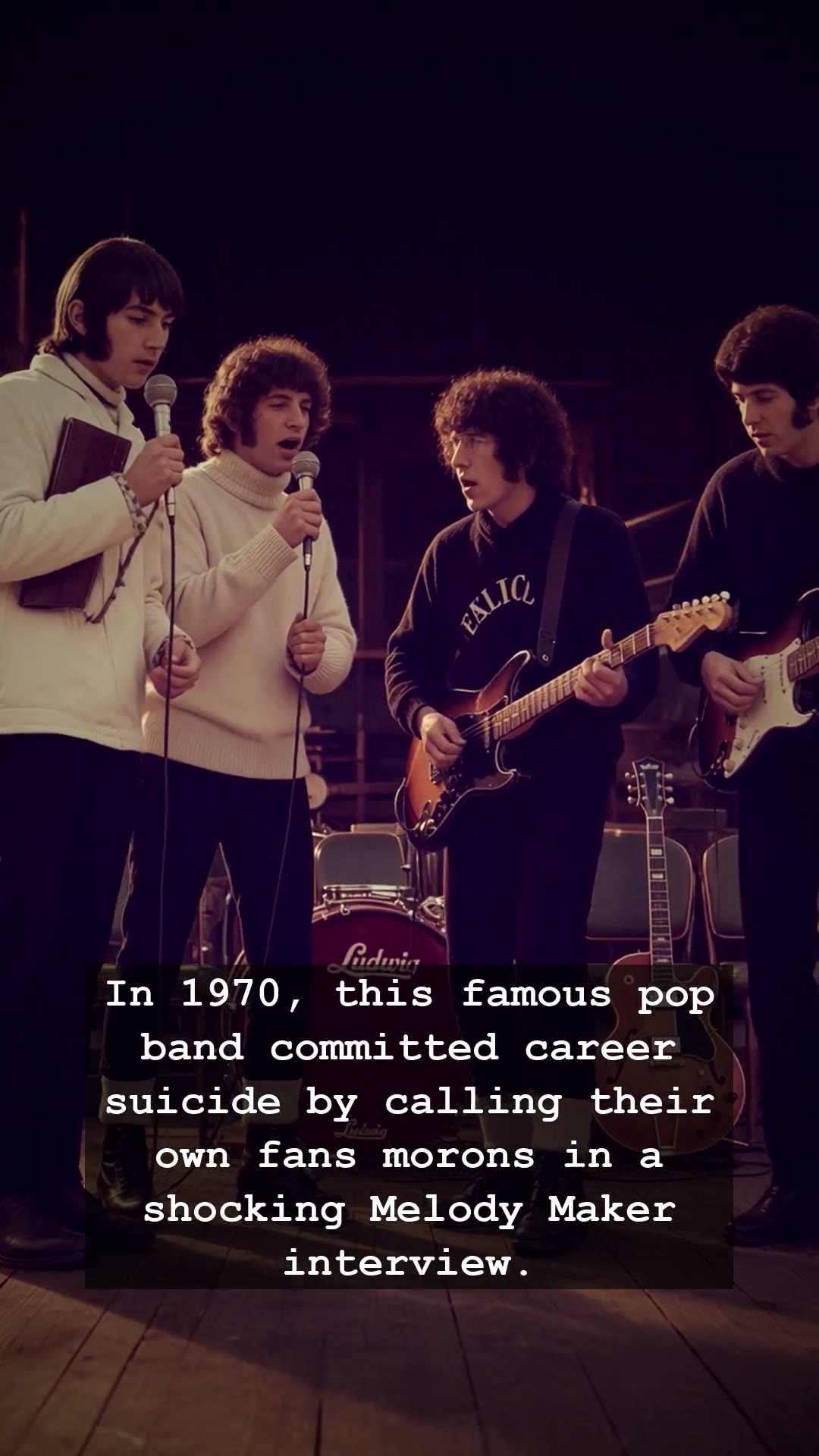
In the golden age of pop, where the jingle of the jukebox defined our youth and the radio was our only bridge to the stars, one band seemed destined for eternal stardom. The Tremeloes were the sweet-faced British sensations, the masters of tight harmonies and infectious melodies that once stood toe-to-toe with the legends of the British Invasion. They were the poster boys of harmony, yet in 1970, they managed to pull off what remains one of the most baffling acts of career suicide in rock and roll history. In a single moment of unfiltered arrogance, they traded their legacy for a headline that would haunt them for decades.
It happened during a candid, ill-fated interview with the prestigious Melody Maker. While the band was meant to be promoting their latest efforts, the conversation took a venomous turn. Whether it was the pressure of the changing musical landscape or simply the fatigue of a decade in the spotlight, the members of The Tremeloes made the fatal mistake of biting the hand that fed them. They publicly branded their own loyal fans as morons, effectively spitting on the very audience that had carried them to the top of the charts. In an era before social media, where a printed quote in a magazine held the weight of a legal decree, the backlash was swift and unforgiving.
To understand the magnitude of this betrayal, one must remember what The Tremeloes represented in 1970. The world was shifting; the flower power of the sixties was fading, and the grit of harder rock and the complexity of the burgeoning prog scene were taking hold. By lashing out at their fan base, the band didn’t just insult their listeners; they alienated the very people who kept the Walkman tapes spinning and the vinyl records selling. The public, feeling scorned, turned their backs. The radio stations, sensing the shift in the wind, began to pull their tracks. It was a spectacular collapse of image, a crash from grace that felt almost Shakespearean in its hubris.
Looking back, the story of The Tremeloes serves as a stark reminder of the fragile contract between an artist and their public. It wasn’t the music that killed their momentum; it was the ego. Even today, the incident is whispered about in music history circles as a cautionary tale of how quickly the pedestals we build can crumble. The irony is, of course, that their music remains technically brilliant—a testament to a time when melody reigned supreme. Yet, the shadow of that 1970 disaster remains, a ghost in the machine of their career that refuses to dissipate.
When we listen to their hits today, we aren’t just hearing pop songs; we are hearing the echoes of a band that once held the world in their palms before letting it slip through their fingers. It is a lesson for the ages: never forget who is listening on the other side of the studio glass. As the crackle of the record needle fades into the quiet of the room, one can’t help but wonder what could have been if they had just kept their silence.