
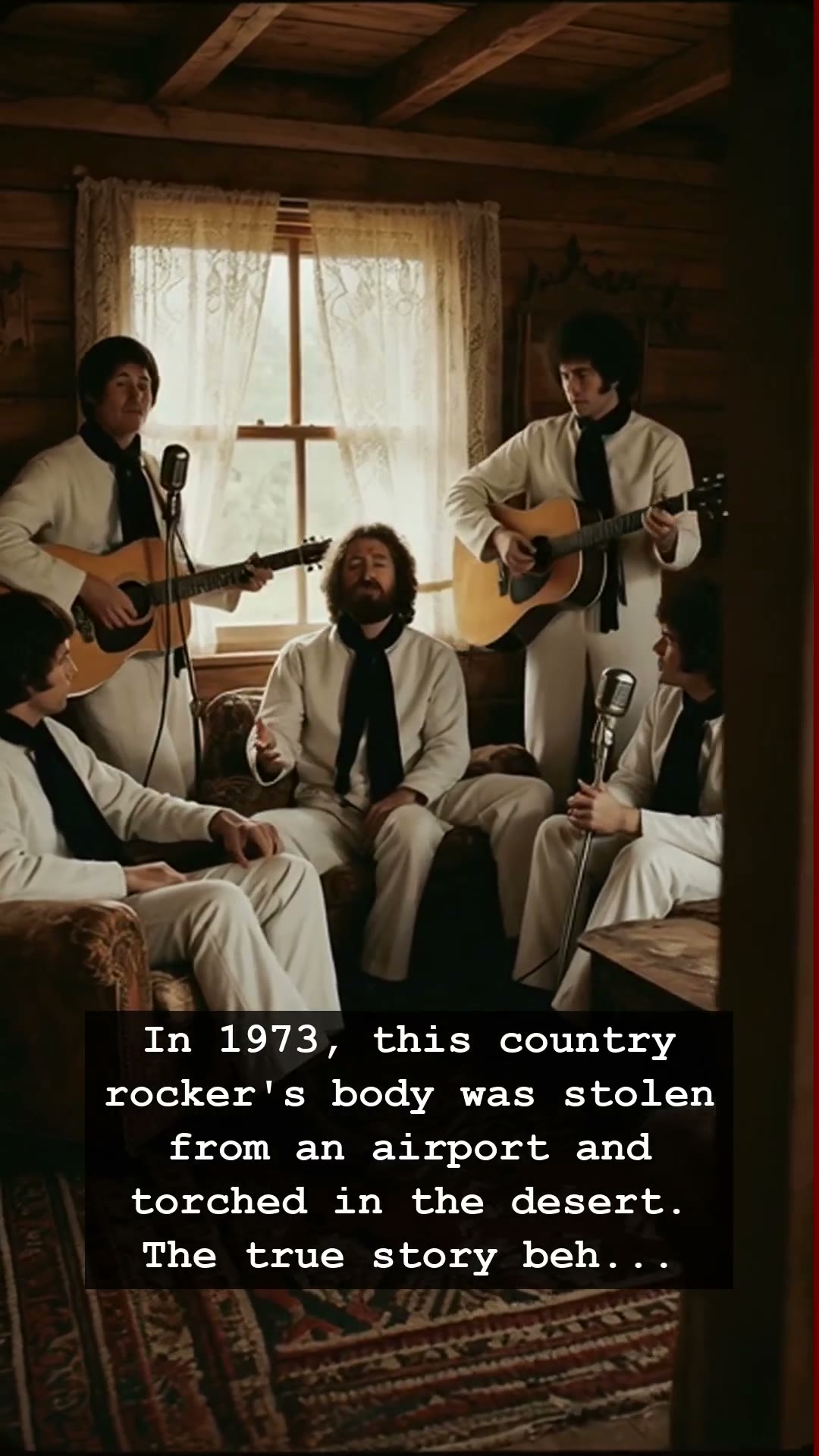
In September 1973, a hearse sped away from the Los Angeles International Airport, carrying the body of a music icon destined for an illicit, fiery end. While the public expected a solemn, traditional burial for Gram Parsons, his road manager and friend Phil Kaufman had other plans. In a move that still shocks the music industry today, Kaufman stole the coffin, drove it into the heart of the Joshua Tree National Park, and set it ablaze. This was not an act of malice or insanity, but the final, brutal fulfillment of a promise made between two men who lived for the open road and the lonesome soul of country rock.
Gram Parsons was a complicated figure, the architect of a sound that bridged the gap between the gritty world of honky-tonk and the rebellious spirit of rock and roll. Before his untimely death at the age of 26 from a drug overdose, he had spent his short life traversing the country, leaving a trail of beautiful, melancholic melodies in bands like the Flying Burrito Brothers and The Byrds. He was a pioneer of Cosmic American Music, a genre that felt like a dusty sunset over a desolate highway. Yet, the same lifestyle that produced such hauntingly beautiful art eventually led him to the lonely motel room where he took his last breath.
When he passed, Parsons had allegedly told Kaufman that if he ever died, he did not want a cold, sterile funeral service. He wanted to be taken to Joshua Tree, the place where he had spent some of his most creative and spiritually significant days, and burned beneath the desert stars. Driven by a mix of grief and devotion, Kaufman took a stolen hearse and decided to carry out this macabre wish. As the flames consumed the casket, they were witnessing the final, wild exit of a man who refused to conform to society even in death, marking one of the most infamous headlines of the seventies music scene.
The heist sparked a massive media frenzy, turning an act of morbid friendship into a tabloid spectacle. Many saw it as a disrespectful stunt, yet for those who understood the deep, chaotic bond between the artist and his manager, it was the only fitting end for a man as untamed as Gram Parsons. It resonates today as a haunting symbol of the rock and roll excess that defined the era, a time when the lines between art, life, and self-destruction were perpetually blurred.
Decades later, the legend of Gram Parsons continues to grow, drawing new generations of listeners to his records. He remains a ghostly figure in the history of music, a reminder of the fragility of talent and the intensity of the friendships forged in the shadows of the spotlight. As the wind still blows across the Joshua Tree desert, the memory of that bizarre night lingers—a testament to a life lived without boundaries, ending in a blaze that the world could never forget. Perhaps the most authentic tribute is simply to keep his music playing, allowing the echoes of his voice to outlast the fire.